
Hair Transplant Surgery — Medical First, Surgical When Appropriate
Get Your Hair Transplant Quote
Click to upload several photos for an upfront quote and personalised hair loss advice.
How We Approach Hair Loss
Hair loss doesn’t follow a single script. Some men lose density at the crown first, others at the hairline or temples, and some experience diffuse thinning across the scalp. The pattern and speed of loss vary, but the underlying mechanism is usually the same.
In early stages, medical treatment can slow or stabilise progression. That’s always the first step and why many patients remain on medication long-term.
Once an area has thinned beyond recovery and follicles are no longer producing viable hair, medication cannot reverse it. At that stage, hair transplantation is the only reliable option to restore density.

When Surgery Makes Sense
We work with Dr Ahmad Moussa, an experienced hair transplant surgeon who also operates for some of the UK’s best-known clinics.
Because patients are assessed in-house and referred directly, we’re able to offer the same surgical expertise at a lower overall cost, without pressured sales consultations or high-overhead clinic environments.
What this approach means in practice
- Appropriate only after stabilising hair loss
- Based on medical assessment, not vanity
- Surgery planned as part of a long-term strategy
RISKS AND COSTS OF HAIR RESTORATION

The cost of hair transplantation will depend largely on the amount of hair to be transplanted, but it generally ranges from £4000-£5500.
Hair transplantation can make a substantial difference when thinning or balding is affecting your appearance, but it’s important to be clear about what it does and doesn’t do.
A transplant redistributes your existing hair from areas that are genetically resistant to loss into areas that have thinned. It does not create new hair, increase your total hair count, or stop future loss elsewhere.
Outcomes are best when surgery is planned properly, performed conservatively, and combined with appropriate medical treatment. Suitability depends on your health, donor supply, pattern of loss, and long-term expectations, all of which should be assessed before proceeding.
HAIR RESTORATION SURGERY
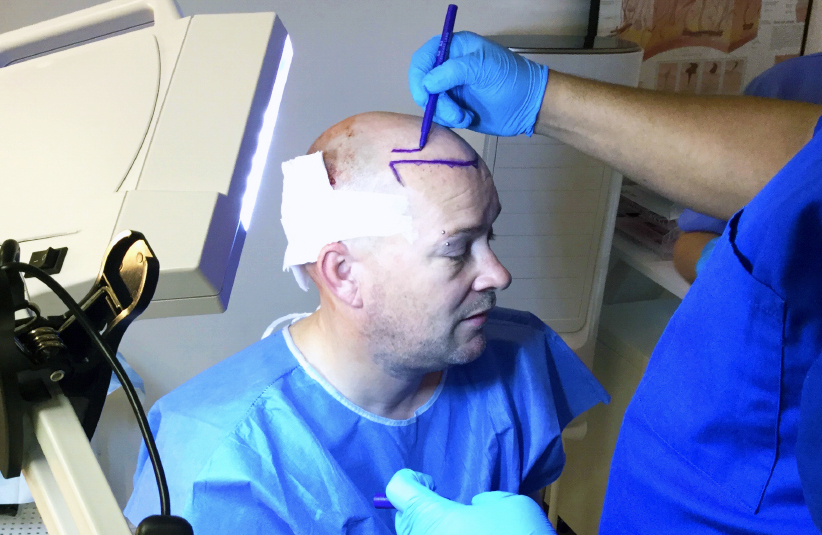
Most procedures take between 4 and 8 hours, depending on the number of grafts required and the complexity of the plan. We treat one patient per day and do not rush surgery. The procedure takes as long as it needs to in order to achieve the best possible outcome.
Treatment is carried out under local anaesthetic. The scalp is numbed before graft extraction and placement, and the procedure is generally well tolerated. While some pressure or mild discomfort can be expected during anaesthetic administration, most patients find the process straightforward and manageable.

After surgery, it’s normal for the scalp to feel tender, particularly in the donor area. This usually settles within a few days. Mild pain relief may be required for a short period, and you may be asked to wear a light dressing initially. Antibiotics or anti-inflammatory medication are sometimes prescribed as part of routine aftercare.
Most patients are able to return to work within 7–10 days, depending on the nature of their job and how visible the treated areas are.
Transplanted hairs typically shed within the first few weeks. This is expected and temporary. New growth begins after several months, with visible improvement continuing over time. Results develop gradually, with the majority of growth evident by 6–9 months, and further maturation beyond that.
WHAT IS AN FUE HAIR TRANSPLANT?
Follicular Unit Extraction (FUE) involves relocating individual hair follicles from a donor area, typically the back or sides of the scalp, to areas of thinning or hair loss. These donor hairs are genetically more resistant to DHT and are therefore suitable for long-term transplantation.
The procedure is performed under local anaesthetic and is minimally invasive. Because follicles are extracted individually, there is no linear scar, and healing is generally straightforward.
Follicles are removed using a fine punch device, usually between 0.6mm and 0.9mm, and are carefully placed to match the natural angle, direction, and density of existing hair. The focus is on achieving a natural, age-appropriate result rather than maximum graft numbers.

WHAT IS AN FUT HAIR TRANSPLANT?

Follicular Unit Transplantation (FUT) is an older surgical technique that involves removing a narrow strip of hair-bearing scalp from the donor area, usually at the back of the head. Individual follicular units are then dissected from this strip and transplanted into areas of hair loss.
The procedure is carried out under local anaesthetic. After the donor strip is removed, the area is closed with sutures, leaving a linear scar that is typically concealed by surrounding hair.
FUT can allow a larger number of grafts to be harvested in a single session, but it is more invasive than FUE and involves a longer recovery period. For this reason, it is now used less frequently and is generally reserved for specific cases where it may offer a technical advantage.
As with all hair restoration surgery, long-term planning is essential. Ongoing hair loss may require further treatment or additional procedures in the future.