Aftercare guide
Hair Transplant Preparation and aftercare.
The key to a great result is meticulous aftercare. This is the guide written by Dr Ahmad Moussa (GMC 6065705) and handed to every patient before and after their procedure.
- What to do the week before, and the day of
- Day 1 through Day 14 walkthrough
- Washing technique and medication schedule
- What’s normal vs when to call us
The principle
“The key to a great result is meticulous aftercare.”
A transplant is only half the work. Healing well and protecting the grafts in the first two weeks is what makes the difference between an average result and an excellent one.
This page walks you through every stage, from the week before your procedure through to Day 14 and beyond. Print it, screenshot it, or come back to it whenever you need a reminder.
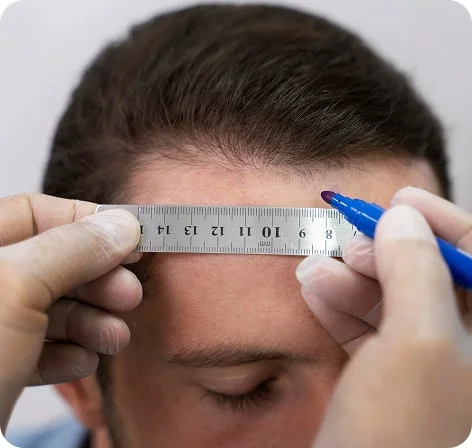
Your timeline, day by day
Follow each stage in order. If anything feels off, call us.

The week before
Cut down on alcohol, caffeine, and any blood-thinners (including aspirin and ibuprofen) and stop them entirely 48 hours before your procedure. Declare any prescription medication to your surgeon. FUT patients: begin scalp massage in the months prior and ramp it up this week.
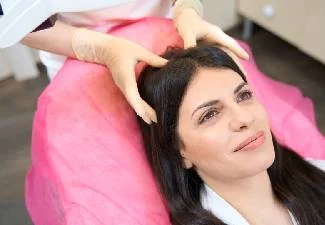
The day of
Dress comfortably, tracksuit bottoms ideal. Wear a top with a front zip or buttons so you can change without lifting it over your head. Turn up with clean hair and no product. Have breakfast (a full English is great). No coffee.

Day 1 (the day of your transplant)
Your surgeon will give you detailed post-op instructions on the day. Take it easy and keep your heart rate down. Some donor-area discomfort is normal once the anaesthetic wears off, and a little swelling around the eyes and nose can appear over the next 24 to 48 hours.

Day 2
You can remove the dressing from your donor area. Spray the new grafts with saline solution every couple of hours. Do not touch your head. Continue your antibiotic and prescribed schedule.
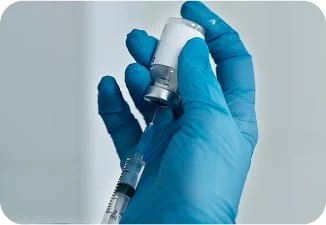
Day 3 to 13, washing
Day 3 is your first gentle wash, as instructed by your surgeon. Use baby shampoo only. Tap gently over the transplanted area, use fingertips on the donor zone, and rinse with warm water from a cup. No shower-jet stream over the transplanted area. Dab, don’t rub. Repeat daily, continue saline spray every couple of hours.

Day 14 onwards
On Day 14 apply baby shampoo to the transplanted area, massage in circles, leave for 1 hour, then rinse. Dry crusts should fall off. From Day 15 you can go back to your usual shampoo and resume normal activity, including the gym, hats, and travel.
Medication
The medication schedule we provide
Medication plays an important role in aiding recovery, managing discomfort, and preventing infection. The pack we provide includes:
- Flucloxacillin (antibiotic): 1 tablet 4 times a day, Day 1 to Day 6.
- Prednisolone: 7 tablets in the morning on Day 2, Day 3, Day 4, and Day 5.
- Paracetamol (as needed): 500 mg, two tablets every six hours for up to two days, then at your discretion if discomfort continues.
Please consult your GP before taking any medication.

What's normal in the first weeks
NHS-aligned guidance. If something feels worse than this, contact us.

Swelling
Mild swelling around the forehead, eyes, or nose can appear in the first 2 to 4 days. It usually settles without intervention.

Bleeding
A small amount of bleeding from the donor area immediately post-op is possible. Apply gentle pressure with gauze until it settles.

Pain
Some discomfort in the donor area, transplanted area, or neck is possible. Paracetamol is the recommended pain relief.

Numbness or tingling
Tingling or numbness in the recipient area can last from a few weeks to a few months and will fade without intervention.

Infection
Low risk with antibiotic cover. Return to clinic if you see localised redness, increasing pain, or discharge.
Important do's and don'ts
The non-negotiables
- Do not rub or scratch. It can dislodge grafts in the first 10 days.
- No chemical-based products for 4 weeks. No hair colour, lacquer, or styling sprays on the scalp.
- No sun beds, for 6 months, ideally never.
- Avoid caps in the first few days. Grafts heal faster with air exposure.
- Use baby shampoo only for 14 days. Nothing else.
- No tar shampoo for 10 days. It can interfere with graft growth.
- Transplanted hair shedding is normal. Expect it in the first 4 weeks. The follicles are safe at Day 10.

Frequently asked questions
When can I go back to work?
Will the grafts fall out when I wash my hair?
When will I see results?
What about smoking, alcohol, exercise?
When do I have follow-up reviews?
Questions about your aftercare?
Talk to the team directly. We are here from your consultation through to the 12-month review.