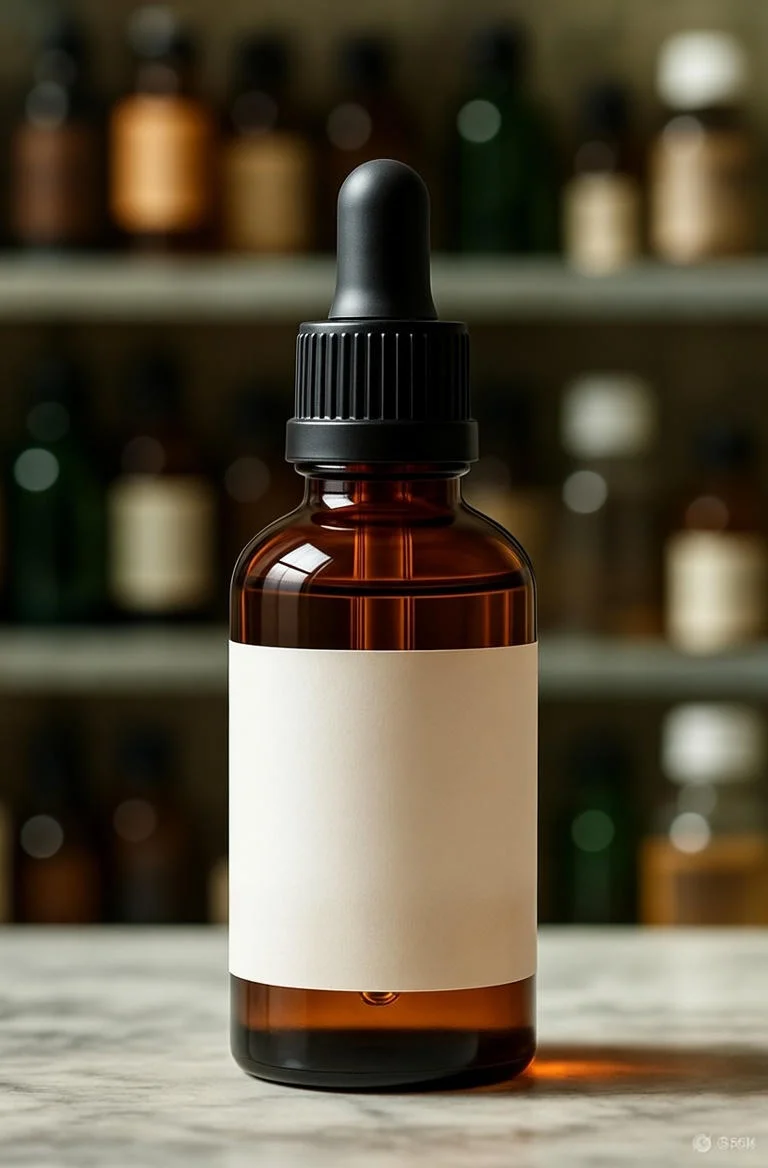
Custom Compounded Topical Hair Loss Formula: Build Your Own
Hair loss isn't one problem with one solution. Every pattern is different: receding hairline, crown thinning, diffuse loss, scarring alopecia, sensitivity to specific ingredients. Yet most topical products are off-the-shelf and one-size-fits-all. You buy the strength that the manufacturer happens to make, in the base that the manufacturer happens to use, and hope it fits.
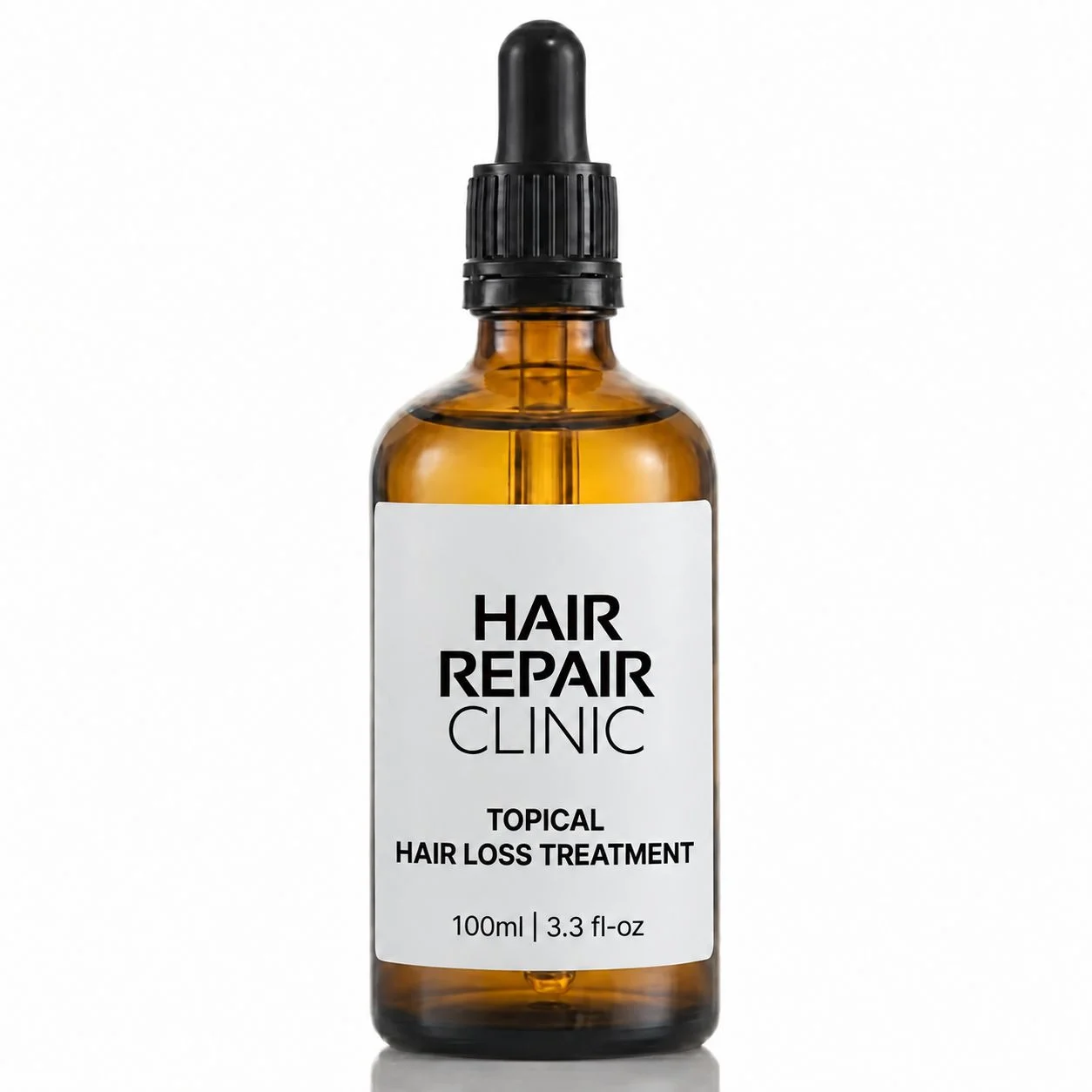
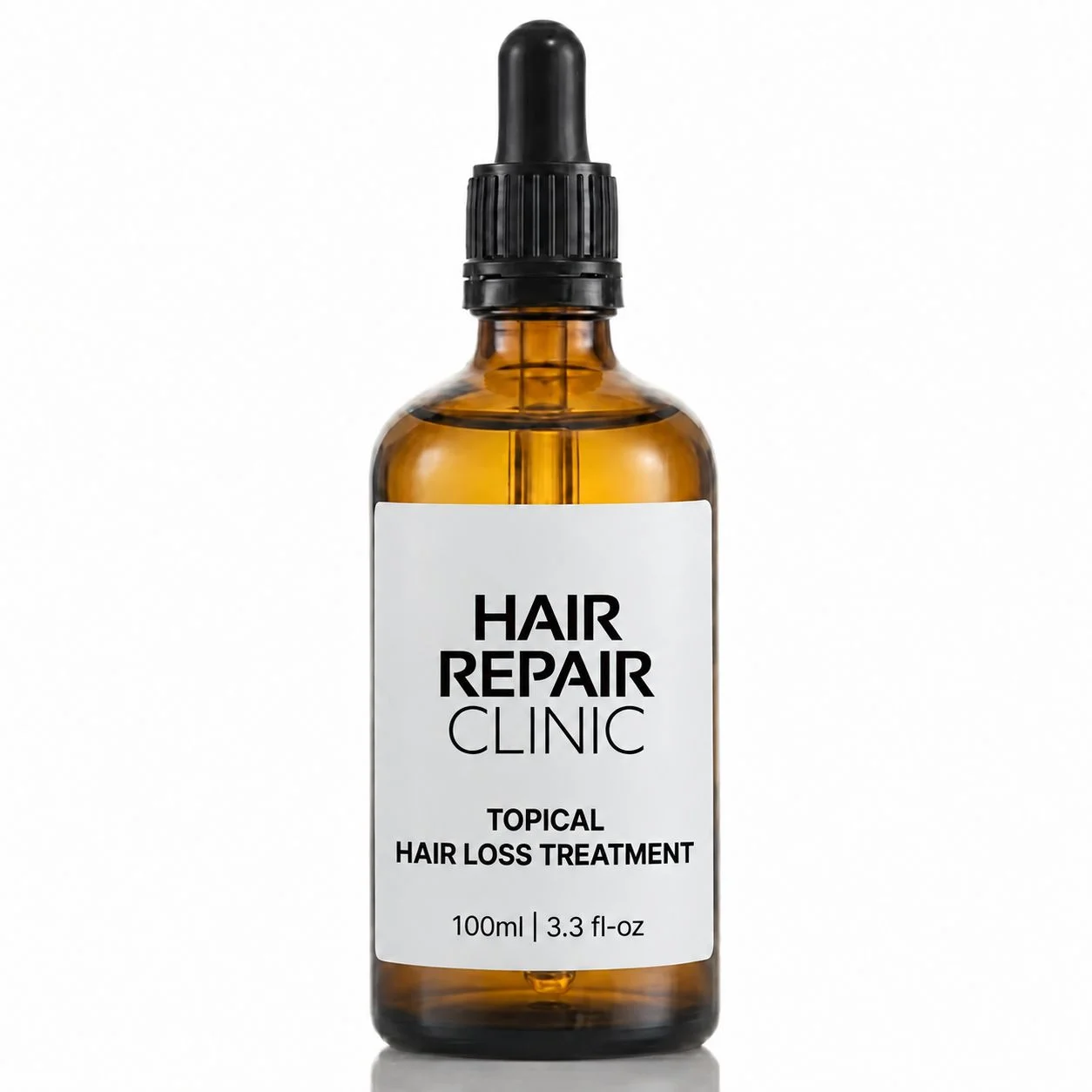
We built something different. Hair Repair Clinic's Custom Topical Formula is, to our knowledge, the only fully customisable, prescription-strength, GPhC pharmacist-compounded topical hair loss treatment in the UK. You choose the base. You choose the active compounds. You choose the exact concentrations. A UK-registered pharmacist reviews your formula, then it's freshly compounded to order and delivered with your personalised label.

How custom compounding works
A “compound” is a medication that a pharmacist makes to a specific prescription, rather than picking a finished product off a shelf. Compounding is how hospital pharmacies, paediatric pharmacies, and specialist clinics have always made tailored medicines for individual patients.
Most UK hair loss platforms only offer pre-made products: a 5% minoxidil solution, a 0.1% finasteride solution, and so on. Our compounding pharmacists let you specify everything about the topical you want, within evidence-supported ranges, and they then prepare it under proper UK pharmacy oversight. That means your formula is matched to your hair-loss pattern, your scalp sensitivity, your previous treatment response, and your tolerance.
Step 1: Choose your base solution
The base (also called the “vehicle” or “carrier”) is the liquid that holds and delivers the active ingredients into the scalp. Two options:
TrichoSol (Popular): water-based, alcohol-free, propylene glycol-free, and propanol-free. Our preferred carrier for sensitive scalps and for patients who have reacted to standard topicals. +£50.00.
Propylene Glycol (PG): the classic minoxidil base used in most US compounded formulas. Excellent solvency for hydrophobic actives. Suitable for patients who tolerate it. +£50.00.
If you're not sure which to pick, the configurator shows a brief explainer for each, and our pharmacist will flag if your chosen combination should use one base over the other.
Step 2: Choose your DHT blocker (optional)
The driver of male and female pattern hair loss is dihydrotestosterone (DHT). Blocking DHT at the scalp lets follicles recover. You can add one of the following:
Finasteride at 0.025%, 0.05%, 0.1%, or 0.2%. The most-studied topical anti-androgen, with substantially lower systemic absorption than oral. See our topical finasteride strength guide.
Dutasteride at 0.01%, 0.025%, 0.05%, 0.1%, or 0.2%. Stronger than finasteride; blocks both Type I and Type II 5-alpha reductase. Often used by patients who haven't fully responded to finasteride. See our finasteride vs dutasteride comparison.
Spironolactone at 1%, 2%, or 3%. Topical anti-androgen often used by women with female pattern hair loss who cannot tolerate oral spironolactone. See our topical spironolactone page.
Melatonin at 0.1%, 0.2%, or 0.3%. A gentler option supported by clinical data in female pattern hair loss. See our topical melatonin page.
Step 3: Add minoxidil (optional)
Topical minoxidil is the most-studied hair regrowth ingredient and stimulates follicles directly. Available at 0%, 2%, 5%, or 10%. Most men with male pattern hair loss benefit from 5% as a baseline; 10% is sometimes used by patients with stubborn crown loss who have plateaued at 5%. Women typically use 2% or 5%.
Step 4: Add up to five active compounds (optional)
In addition to the DHT blocker and minoxidil above, you can layer up to five further evidence-supported actives:
Niacinamide 1%: vitamin B3 derivative; supports scalp microcirculation and barrier function.
Vitamin E 5%: antioxidant; reduces oxidative stress in the follicle.
17α-estradiol 0.05%: a non-feminising estrogen used in European topical hair loss formulations, particularly for female pattern hair loss.
Caffeine 2%: stimulates the hair follicle and inhibits 5-alpha reductase activity at the scalp.
Azelaic Acid at 2%, 3%, 4%, 5%, or 10%: anti-androgen and anti-inflammatory; often paired with minoxidil.
Prostaquinon at 3% or 4%: newer prostaglandin-pathway active.
Tretinoin 0.01%: improves minoxidil penetration and enhances follicle response; widely used in compounded protocols.
Spironolactone at 1%, 2%, or 3%: can be added as a supplementary anti-androgen.
Melatonin at 0.1%, 0.2%, or 0.3%: supplementary regrowth support.
Cetirizine 1% (fixed concentration): second-generation antihistamine being explored in topical hair loss formulations for its prostaglandin D2-modulating activity.
Compounds can interact, and not every combination is sensible. Our configurator gates conflicting selections, and your pharmacist will contact you if anything in your formula needs adjustment before it's made up.
Step 5: Pharmacist review and dispensing
Once you've built your formula and completed our online medical questionnaire, a UK GPhC-registered prescriber reviews your answers and medical history. They check that the ingredients, concentrations, and base are appropriate for your hair-loss pattern and medical history. If anything needs changing, they message you directly. Once approved, the formula is freshly compounded (usually within 1 to 3 working days) and dispatched to you with a personalised label.
Why “custom” matters
There are three reasons to use a custom-compounded topical over an off-the-shelf product.
1. Precision dosing. If you tolerate 0.1% topical finasteride but find 0.2% irritating, you can't buy that exact step on the open market. With us you can. Same for minoxidil between 5% and 10%, dutasteride between 0.05% and 0.1%, and so on.
2. Avoiding problem ingredients. The most common reason a topical “stops working” is irritation, not lost efficacy, and the usual culprits are propylene glycol and alcohol. The TrichoSol base base eliminates both. See our article on systemic absorption of topical finasteride for why base matters.
3. Single-bottle simplicity. Juggling oral finasteride, topical minoxidil, a separate topical finasteride and the rest is hard to keep up. Four or five actives in one bottle, correctly compounded for stability, means one application twice a day and you're done.
Who custom topicals are for
Sensitive scalps that can't tolerate alcohol or PG. Pick TrichoSol and skip the irritants entirely.
Plateaued patients who have been on a stock topical for 12+ months and want a stronger or layered formula.
Side-effect-aware patients who don't want oral finasteride or dutasteride but want comparable DHT suppression at the scalp.
Women with female pattern hair loss who want spironolactone and melatonin in one bottle (with or without minoxidil).
Cost-conscious patients who are otherwise buying three or four separate topicals; consolidating them into one custom bottle is usually cheaper.
What custom topicals are not
Custom compounding doesn't mean “throw everything in.” Each ingredient list is constrained to combinations that the literature supports and that compound stably. Our pharmacist will adjust or veto any combination that doesn't make clinical sense. Custom doesn't mean unsupervised. It means tailored, with the same regulatory oversight as any other UK prescription.
Once your bottle arrives, our Topical Treatment Application Guide (PDF) covers how to apply it, contact with other people, storage and what to do if something goes wrong. Download it to keep with your bottle, or read the full step-by-step application guide.
Build yours
Start with our Custom Formulas landing page for a quick overview, or jump straight into the configurator if you already know what you want. The configurator updates pricing live as you add ingredients.
If you'd rather start with a ready-made formula, see our compounded standards: topical finasteride, topical dutasteride + 10% minoxidil, topical spironolactone, and topical melatonin.
For the full picture of UK hair loss treatment options, see our complete UK hair loss treatment guide.
Medical reviewer: Dr Ahmad Moussa MB BCh, MSc, MRCS(Eng), MD, FRCS(SN), NHS Neurosurgeon and Hair Transplant Surgeon.
Published: . Last updated: . Last reviewed: . All prescription medications are dispensed by a GPhC registered UK partner pharmacy.
Disclaimer: this page is for general information only and does not constitute medical advice. Prescription treatments are not appropriate for everyone. Prescription only treatment is supplied only where a UK registered prescriber judges it clinically appropriate after reviewing your online medical questionnaire.
Related Articles
How to Apply a Topical Hair Loss Treatment: Step-by-Step UK Guide
11 Jun 2026
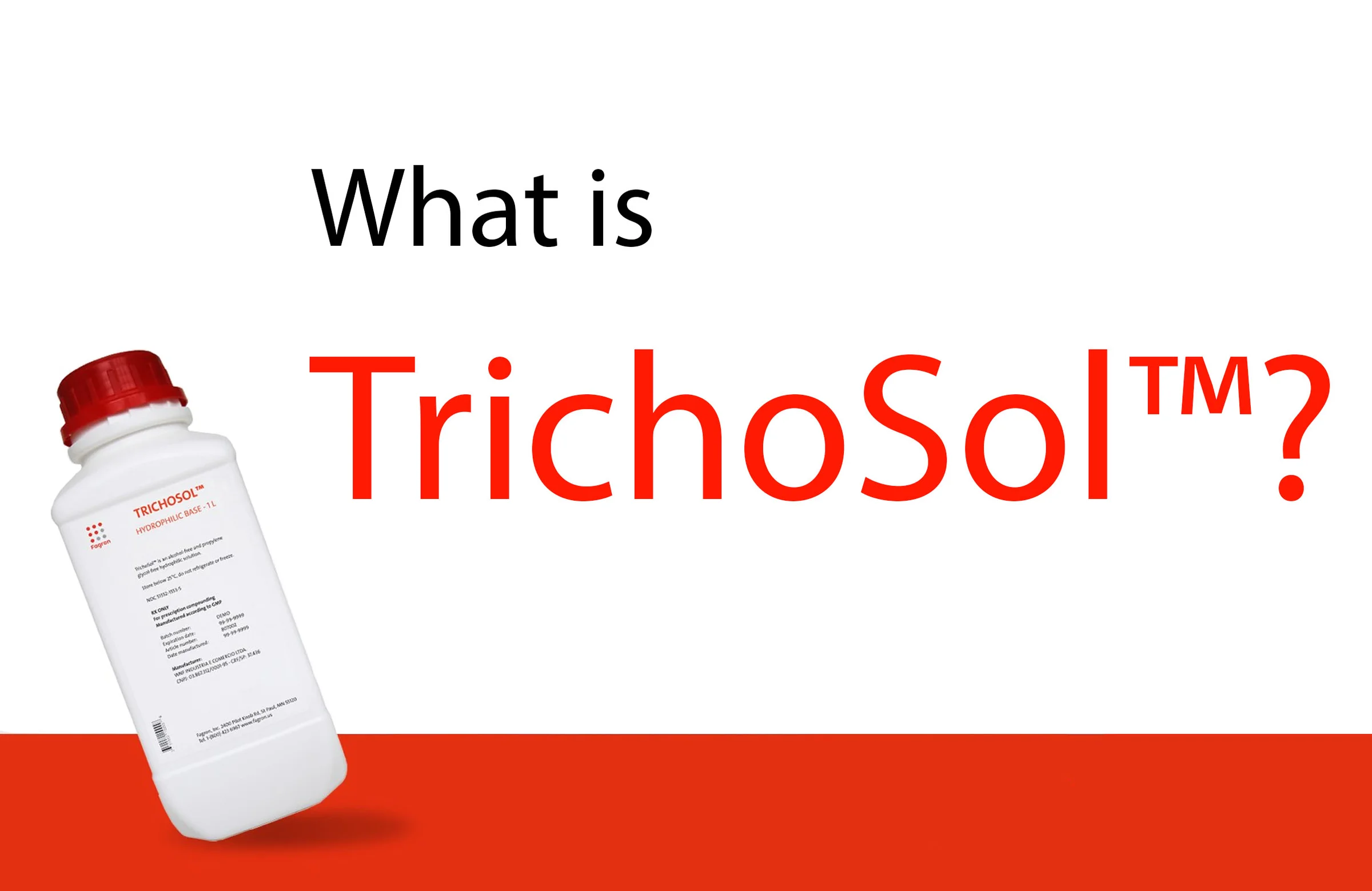
What is TrichoSol?
21 Nov 2023
Topical Melatonin for Hair Loss UK Guide
29 Sept 2026
Spironolactone for Hair Loss UK: The Complete Guide
29 Sept 2026
Topical vs Oral Finasteride: Which is Better for Hair Loss in the UK
10 Sept 2026

Oral vs Topical Minoxidil for Hair Loss: UK Guide
24 Jul 2026