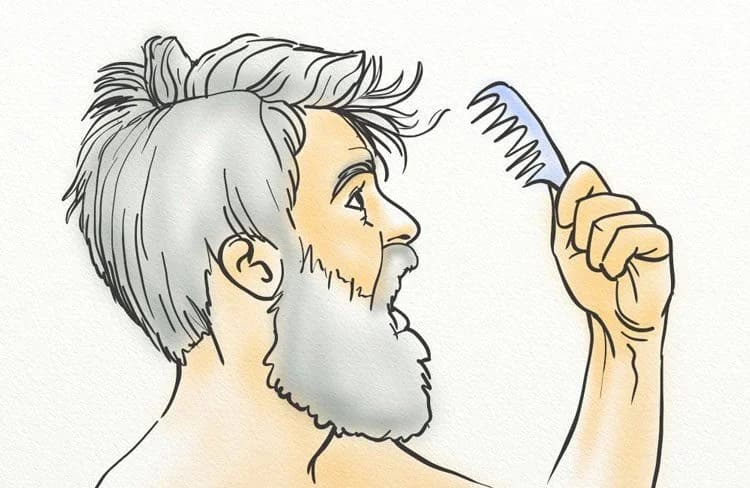
4 Signs That You Are Losing Your Hair
Am I Losing My Hair? 4 Signs You Shouldn't Ignore
Hair loss is one of the most common concerns we see at Hair Repair Clinic, and one of the most frequently dismissed. Many people spend months or years attributing their hair loss to stress, a bad haircut, or a change in shampoo before seeking advice. By that point, the window for the most effective early intervention has often narrowed.
The medical term for hair loss is alopecia, and it covers a wide range of conditions. Androgenetic alopecia, the hereditary form most commonly associated with male and female pattern baldness, affects roughly two thirds of men by the age of 35 and around 40% of women by the age of 50. It is progressive and, without treatment, will continue. The earlier it is addressed, the more hair there is to protect.
Here are four signs that what you're experiencing is more than normal shedding.
1. Thinning Hair
Some daily hair loss is entirely normal: most people shed between 50 and 100 hairs a day. The concern is when hair is falling out faster than it's being replaced, or when the hairs that regrow are thinner and finer than before.
Signs to look for:
A noticeably wider parting or increased scalp visibility around the crown
More hair than usual left in the brush, on the pillow, or in the shower drain
Ponytails that require an extra loop, or feel thinner than they used to
A general loss of volume that styling products can no longer mask
Thinning is often the earliest stage, and the one where treatment has the greatest impact. It is worth seeking advice before the thinning becomes visible to others.
2. A Receding Hairline
In men, a receding hairline is typically one of the first visible signs of androgenetic alopecia. It usually begins at the temples, gradually forming an M-shape, and may progress to a horseshoe pattern as the hairline retreats further and the crown thins simultaneously.
In women, a receding hairline is less common but does occur. More typical is a diffuse thinning across the top of the scalp, with the hairline remaining relatively intact.
A family history of hair loss on either side increases the likelihood that what you are seeing is hereditary. This form of hair loss does not resolve on its own.
3. Bald Patches
Bald patches, areas where hair has been lost entirely rather than just thinned, can indicate different types of alopecia. Androgenetic alopecia typically presents as gradual, patterned loss rather than distinct patches. Patchy loss, particularly if it appears suddenly, circular, or in multiple areas, may indicate alopecia areata, an autoimmune condition in which the immune system attacks hair follicles.
Alopecia areata can affect the scalp, eyebrows, beard, eyelashes, and in more severe cases, the entire body. It is distinct from pattern baldness and requires a different approach to treatment.
If you have noticed one or more defined bald patches, a clinical assessment is important to establish the cause before any treatment is considered.
4. Hair Loss Beyond the Scalp
Hair loss limited to the scalp is not the only presentation of alopecia. Some types affect the eyebrows, beard, or body hair. Alopecia universalis, the most extensive form, involves complete loss of hair across the entire body.
Changes to eyebrow density, patchy beard loss, or thinning eyelashes can all be early indicators of a systemic condition that would benefit from specialist assessment. They are also sometimes the first sign in people whose scalp hair loss has not yet become obvious.
What to Do If You Recognise These Signs
The most important step is not to wait. Hair follicles that have been dormant for a prolonged period are significantly harder to reactivate than those that have only recently stopped producing hair. Early treatment, whether medication, non-surgical procedures, or a combination, consistently produces better outcomes than treatment started after substantial loss has occurred.
At Hair Repair Clinic, we take a precise approach to hair loss treatment. Rather than applying a standard protocol to every patient, we assess the type, pattern, and likely cause of your hair loss individually. For suitable patients, we offer pharmacogenomic testing, a DNA-based analysis that identifies which treatments are most likely to be effective for your specific genetic profile, and which to avoid.
Our treatments include prescription-grade compounded topical and oral medications, combinations of clinically evidenced active ingredients formulated to the concentrations appropriate for your case, as well as non-surgical scalp procedures and hair transplant surgery where indicated.
When you contact Hair Repair Clinic, you speak directly with a specialist, not a sales team.
To book a consultation, visit hairrepairclinic.co.uk
See also: Our complete UK hair loss treatment guide covers every option, from over-the-counter to prescription.
Medical reviewer: Dr Ahmad Moussa MB BCh, MSc, MRCS(Eng), MD, FRCS(SN), NHS Neurosurgeon and Hair Transplant Surgeon.
Published: . Last updated: . Last reviewed: . All prescription medications are dispensed by a GPhC registered UK partner pharmacy.
Disclaimer: this page is for general information only and does not constitute medical advice. Prescription treatments are not appropriate for everyone. Prescription only treatment is supplied only where a UK registered prescriber judges it clinically appropriate after reviewing your online medical questionnaire.
Related Articles

PRP Therapy- Thicken your hair and prevent ongoing hair loss
9 May 2026
FUE vs. FUT Hair Transplants: Which is Better?
15 Feb 2025
Proven Hair Loss Treatments
7 Feb 2025

Should You Use Ketoconazole Shampoo for Hair Loss?
5 Jun 2024

The Norwood Reaper and The Big 3
10 Jan 2024

Topical Finasteride: How to Choose the Right Strength for Your Hair Loss
1 Dec 2023