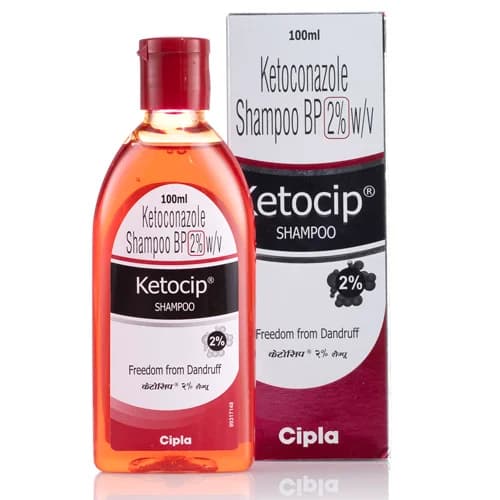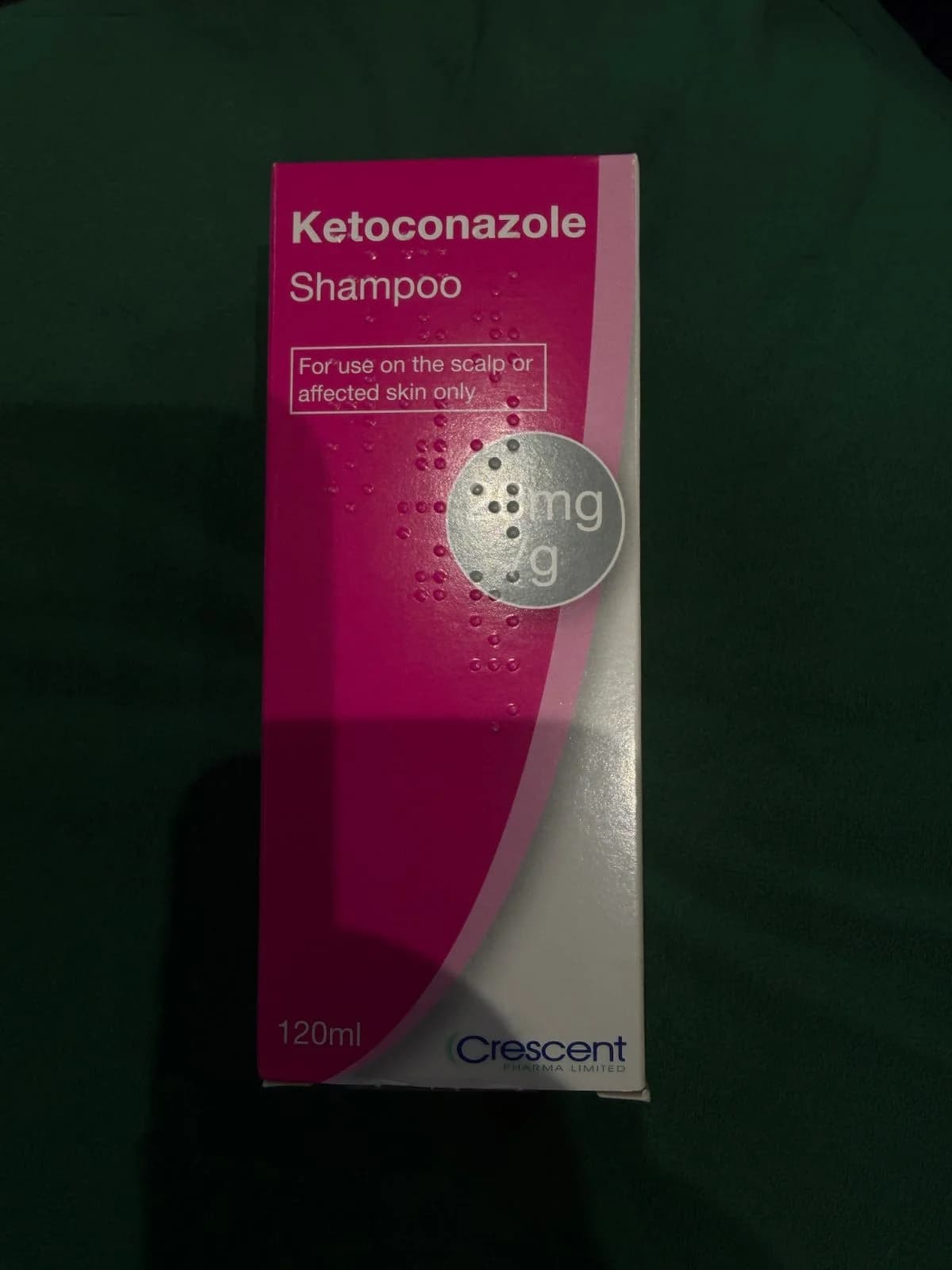
Ketoconazole Shampoo (Dandrazol)
2% ketoconazole shampoo, A perfect alternative to Dandrazol & Nizoral. Shipping £5.50
Ketoconazole
£19.00
✓ Prescription Included
Description
Ketoconazole 2% Shampoo (120ml, Dandrazol brand)
Ketoconazole 2% antifungal shampoo. Used 2 to 3 times per week to treat dandruff and seborrheic dermatitis, and increasingly used as an adjunct to hair loss treatment for its topical anti-DHT and anti-inflammatory effect on the scalp. Prescription only at this 120ml pack size, prescribed and dispensed by a GPhC registered UK partner pharmacy.
How ketoconazole shampoo helps hair loss
Ketoconazole is an antifungal medicine. When applied to the scalp:
It clears the Malassezia yeast overgrowth that causes dandruff and scalp inflammation
It has a mild topical anti-androgen effect (reduces local DHT activity in the scalp)
Reducing scalp inflammation improves the environment for hair follicles
The evidence base for ketoconazole as a hair loss adjunct is modest but consistent: it should not replace finasteride or minoxidil, but it complements them well for men with dandruff, seborrheic dermatitis, or an inflamed scalp.
How to use
Wet your hair and scalp thoroughly in the shower
Apply a small amount of shampoo (a 10p coin is enough) to your scalp
Massage into the scalp for 1 minute, then leave in place for 3 to 5 minutes before rinsing. This contact time is what makes it work
Rinse thoroughly
Follow with a normal conditioner if your hair needs it
Use 2 to 3 times per week for hair loss support and for active dandruff. Once symptoms are controlled, drop to once or twice weekly for maintenance. On non-ketoconazole days, use any gentle shampoo.
What to expect
1 to 2 weeks: dandruff and itch usually reduce noticeably
4 to 8 weeks: full dandruff control if that's the goal
3 to 6 months: modest hair loss benefit if used as an adjunct alongside finasteride or minoxidil
Ketoconazole shampoo is not a standalone hair loss treatment. It's an adjunct.
Side effects
Ketoconazole 2% shampoo is well tolerated. Systemic absorption from shampoo use is negligible because contact time is short and most of the product is rinsed off.
Common (roughly 1 in 10)
Dry hair or scalp with regular use (offset by a good conditioner on non-shampoo days)
Mild scalp itching, especially in the first 2 weeks of use
Uncommon (roughly 1 in 100)
Changes to hair colour or texture with prolonged use (usually reversible on stopping)
Contact dermatitis at the hairline
Rare (less than 1 in 1,000)
Localised allergic reaction (rash, hives at the hairline)
When to seek urgent medical advice
Signs of allergic reaction: facial or lip swelling, difficulty breathing, widespread rash
Severe scalp burning or blistering
Who should not use ketoconazole shampoo
Known allergy to ketoconazole or other imidazole antifungals
Broken or infected skin on the scalp (wait for it to heal first)
Not suitable during pregnancy or breastfeeding without prescriber review
Combining with other hair loss treatments
Ketoconazole shampoo works well alongside:
Topical minoxidil: ideal. Wash with ketoconazole 2 to 3 times per week, apply minoxidil daily to a dry scalp between shampoo days. Wait at least 4 hours after minoxidil before shampooing
Oral finasteride or dutasteride: works independently. No timing conflict
Topical finasteride or dutasteride: yes, same rule as minoxidil (shampoo separately, wait 4 hours)
Ketoconazole 2% vs Nizoral (1% OTC)
Nizoral is the common UK over-the-counter brand at 1% strength (available in supermarkets). The 2% strength has twice the ketoconazole concentration, faster and more thorough dandruff control, and a more robust anti-DHT effect at the scalp. In this 120ml pack it is a prescription only medicine. If OTC 1% Nizoral hasn't worked well enough, 2% is the natural step up.
Prescription and dispensing
This 120ml pack of ketoconazole 2% shampoo is a prescription only medicine in the UK. A UK prescriber reviews the short online health questionnaire at checkout and the shampoo is dispensed by a GPhC registered UK partner pharmacy. UK delivery included.
Ketoconazole shampoo comparators: Ketopine vs Nizoral vs Dandrazol
UK customers searching for ketoconazole shampoo come across a handful of brands. All contain the same ketoconazole active, but strength and availability differ. Here is how they line up:
- Nizoral 1% (Johnson & Johnson): the OTC pharmacy staple. 1% ketoconazole in a 100ml or 200ml bottle, sold in Boots and supermarket pharmacies without a prescription. Fine for mild dandruff but the 1% strength is below the concentration used in most hair loss studies (which used 2%). Around £8 to £10 per 100ml.
- Nizoral 2% (also Johnson & Johnson): the prescription strength. Same brand, twice the ketoconazole. Not sold OTC, must be dispensed against a UK prescription. This is what dermatologists reach for when 1% has not controlled seborrhoeic dermatitis or when the intent is hair loss support rather than dandruff alone.
- Dandrazol 2% (Actavis / Teva UK): a UK generic 2% ketoconazole shampoo, dispensed under prescription. Same active and strength as Nizoral 2%, sold at a lower price. Widely stocked by UK pharmacies. Slightly different vehicle (less foam, more liquid) but clinically equivalent.
- Ketopine 2% (what we dispense): UK prescription 2% ketoconazole shampoo, 120ml bottle. Same active at the same strength as Nizoral 2% and Dandrazol, at £19 including UK prescriber review and delivery. Our default pick for men and women running a proper hair loss regimen.
- Off-label imports (Nizoral 2% from Turkey or India): avoid. Even when the labelling looks identical, imported shampoo is not covered by MHRA quality checks. Prices look attractive but the risk of a mis-labelled, expired or counterfeit bottle is real. Use a UK dispensed prescription version instead.
Bottom line: for scalp maintenance and dandruff alone, Nizoral 1% OTC is enough. For anyone using ketoconazole as part of a hair loss regimen (alongside minoxidil, finasteride or dutasteride), the 2% strength dispensed on prescription is what the clinical evidence used.
Clinical evidence for ketoconazole in hair loss
Ketoconazole is an antifungal that also has a topical anti androgen effect and mild anti inflammatory action on the scalp. This combination makes it useful as an adjunct in male and female pattern hair loss, not as a standalone treatment. Key studies:
- Piérard-Franchimont 1998 compared 2% ketoconazole shampoo to 2% minoxidil in men with androgenetic alopecia over 21 weeks. Both increased hair density and follicle diameter versus baseline. The improvement with ketoconazole was modest but statistically significant, and comparable to non responder rates seen on 2% minoxidil alone.
- Inui and Itami 2007 showed that ketoconazole applied to the scalp reduces local dihydrotestosterone (DHT) production by inhibiting the 5-alpha reductase enzyme in scalp tissue. This provides a plausible mechanism for the hair loss effect that is separate from the antifungal action.
- Fields et al 2020 (systematic review) concluded that 2% ketoconazole shampoo has consistent low grade evidence for improving hair loss when used as an adjunct alongside oral or topical DHT blockers and minoxidil. As a monotherapy the effect is small; as part of a stack it adds meaningfully.
Practical takeaway: think of ketoconazole shampoo as a scalp support product that improves the environment your other hair loss treatments work in, rather than as a growth product on its own. Every 2 to 3 uses per week is enough. Daily use is unnecessary and can dry the scalp.
Regulatory status in the UK
Ketoconazole shampoo in the UK is regulated by strength:
- Ketoconazole 1% shampoo (Nizoral 1%, various generics) is a P medicine, sold from pharmacies without a prescription after a brief pharmacist chat. Also available in some supermarkets under GSL rules for external use.
- Ketoconazole 2% shampoo (Ketopine, Nizoral 2%, Dandrazol) is a POM (prescription only medicine) in the UK. It requires a UK prescription from a registered prescriber and is dispensed by a GPhC registered UK pharmacy. This is what we supply.
Our Ketopine 2% is MHRA licensed for seborrhoeic dermatitis and pityriasis versicolor. Use for hair loss is off-label, which is why the online questionnaire at checkout is reviewed by a UK prescriber before dispatch. Off-label prescribing is legal and common practice when the prescriber judges it appropriate for the individual.
Storage and shelf life
- Store at room temperature (below 25°C), away from direct sunlight. Do not freeze.
- The sealed bottle carries the manufacturer expiry date, typically 24 months from dispensing.
- Once opened, use within 6 months for best foam quality and antifungal potency.
- Keep the cap tightly closed between uses to protect from evaporation and contamination.
- Do not use if the shampoo has separated visibly or changed colour markedly. Contact us for a replacement.
- Keep out of reach of children.
Ingredients: what is in Ketopine 2%
Active ingredient: ketoconazole 2% w/w. The remaining 98% of the shampoo is the vehicle that suspends and delivers the ketoconazole to the scalp. Typical excipients in prescription 2% ketoconazole shampoo:
- Sodium laureth sulphate as the primary surfactant (produces the lather that carries ketoconazole across the scalp and helps rinse away sebum and flakes).
- Cocamide DEA and cocamide MEA as thickeners and secondary surfactants.
- Purified water as the solvent.
- Sodium chloride, imidurea and other viscosity and preservative agents.
- Perfume and colouring at low concentration for scent and appearance.
The full ingredient list is on the bottle label. If you have a known contact allergy or sensitised scalp, tell your prescriber before ordering so they can confirm suitability. Full ingredient details are also in the enclosed Patient Information Leaflet.
Frequently asked questions
How does ketoconazole shampoo help with hair loss?+
Ketoconazole has antifungal and anti-androgenic properties that reduce scalp inflammation and may block DHT at the follicle level.
How often should I use ketoconazole shampoo?+
Use 2-3 times per week, leaving on the scalp for 3-5 minutes before rinsing.
Can I use ketoconazole shampoo with minoxidil or finasteride?+
Yes, ketoconazole shampoo is often used alongside other hair loss treatments.
Can I return this item?+
Prescription and custom-compounded medicines cannot be returned once dispensed under UK pharmacy regulations. Non-prescription items may be returned within 14 days if unused and in their original packaging. See our returns policy at hairrepairclinic.co.uk/returns-policy for full details.
How long should I leave ketoconazole shampoo on my scalp?+
3 to 5 minutes of contact time before rinsing. This contact time is what makes it work. Applying and rinsing straight off gives you almost no benefit.
Will ketoconazole shampoo regrow hair on its own?+
No. It is an adjunct, not a standalone hair loss treatment. It works alongside finasteride, dutasteride or minoxidil by reducing scalp inflammation and mild topical DHT activity. Do not expect regrowth from shampoo alone.
What is the difference between 2% ketoconazole and 1% Nizoral?+
2% is twice the ketoconazole concentration of the 1% Nizoral you can buy in supermarkets. 2% clears dandruff faster, produces a more robust anti-DHT effect at the scalp, and is used 2 to 3 times weekly. In this 120ml pack it is a prescription only medicine in the UK, not general sale.
Can I use ketoconazole shampoo every day?+
Not usually needed and may cause dryness. 2 to 3 times per week is the standard hair-loss adjunct dose. Once symptoms are controlled, drop to once or twice weekly for maintenance.
Is Ketopine the same as Nizoral 2%?+
Same active and same 2% strength. Both are prescription only 2% ketoconazole shampoos dispensed against a UK prescription. Ketopine is a generic 2% ketoconazole product supplied by our partner pharmacy at £19 for 120ml. Nizoral 2% is the branded Johnson and Johnson version at typically £25 to £35 for the same 120ml. The active, mechanism, evidence and licensed use are identical.
How does Ketopine compare to Nizoral 1% OTC?+
Ketopine 2% is double the strength of Nizoral 1% OTC. For mild dandruff, Nizoral 1% is often enough and does not need a prescription. For hair loss support or persistent seborrhoeic dermatitis, the 2% prescription strength is what the clinical evidence used and what UK dermatologists recommend. Ketopine 2% must be dispensed by a UK GPhC registered pharmacy after prescriber review.
How should I store Ketopine and how long does it last?+
Store at room temperature (below 25°C), away from direct sunlight. Do not freeze. Sealed bottle expiry is on the label (typically 24 months from dispensing). Once opened, use within 6 months for best foam and potency. Keep the cap tightly closed between uses and out of reach of children.
Disclaimer: this page is for general information only and does not constitute medical advice. Prescription treatments are not appropriate for everyone. Prescription only treatment is supplied only where a UK registered prescriber judges it clinically appropriate after reviewing your online medical questionnaire.
Last updated: