Hair Loss Medication for Men, Finasteride & Dutasteride
Finasteride for Hair Loss, What It Does, How Long It Takes, and What to Expect
Finasteride is a prescription-only medication and the most widely used medical treatment for male pattern hair loss in the UK. It's been prescribed for hair loss since the mid-1990s and has one of the strongest evidence bases of any hair loss treatment available.
What finasteride actually is
Finasteride belongs to a class of drugs called 5-alpha reductase inhibitors. It works by blocking the Type II isoenzyme of 5-alpha reductase, the enzyme responsible for converting testosterone into dihydrotestosterone, or DHT. DHT is the hormone that causes hair follicles to miniaturise over time in men with androgenetic alopecia. By reducing serum DHT by around 70%, finasteride slows or stops that process in the majority of men who take it.
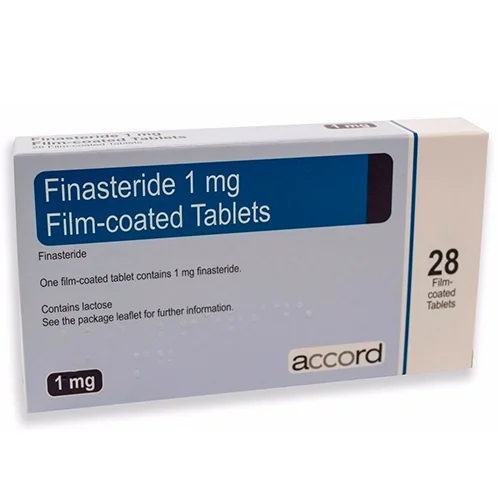
It was originally developed to treat benign prostatic hyperplasia at 5mg daily and is licensed for hair loss at 1mg daily, sold as Propecia in branded form, or as generic finasteride 1mg by several manufacturers including Accord and MSD.
Does it work?
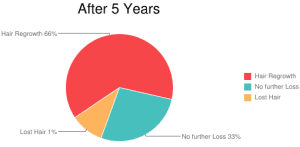
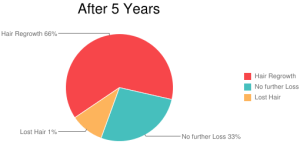
The clinical evidence is strong. A five year randomised controlled trial showed that 90% of men taking finasteride 1mg daily experienced either maintained or improved hair count compared to placebo. Roughly 48% maintained their hair with no further loss, and 42% experienced measurable regrowth. In the placebo group, the majority continued to lose hair throughout the trial period.
These results hold up in real-world use. Finasteride works best when started early, the earlier you begin relative to the onset of thinning, the more hair there is to protect.
How quickly does it work
Finasteride is not a fast treatment. Most men notice stabilisation, the shedding slowing or stopping, within three to six months. Visible regrowth, where it occurs, typically takes longer, often nine to twelve months of consistent daily use before it becomes obvious.
One important point: an initial increase in shedding in the first few weeks is common and does not mean the treatment isn't working. It reflects the hair cycle resetting.
If you have taken finasteride consistently for twelve months and seen no benefit at all, no stabilisation, no regrowth, it is reasonable to reassess. Switching to dutasteride, which blocks DHT more completely, is one option at that point.
Oral vs topical finasteride
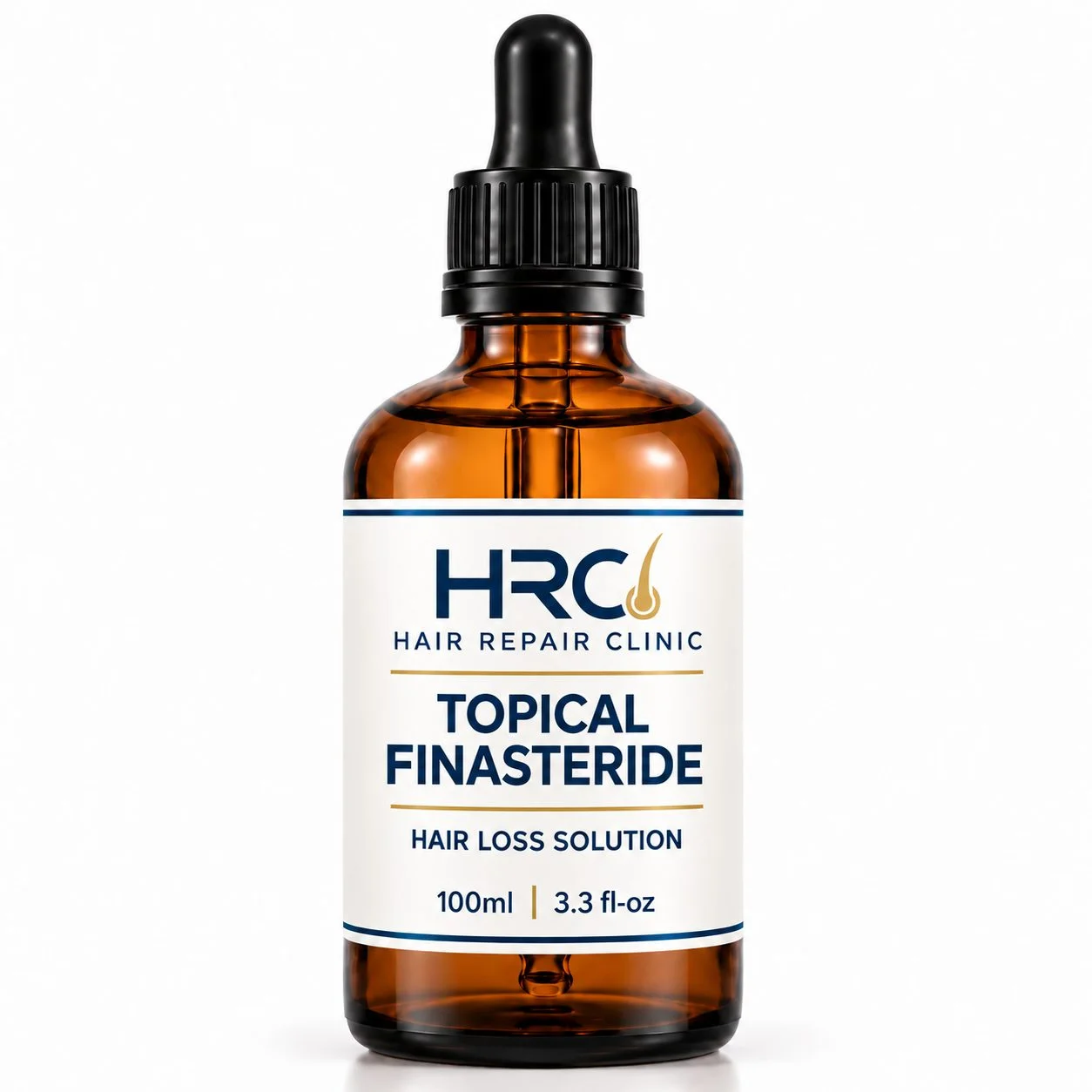
Oral finasteride at 1mg daily is the standard and best evidenced form. Topical finasteride, applied directly to the scalp, is increasingly used by men who want to minimise systemic DHT reduction, studies suggest topical application results in substantially lower systemic absorption than oral, which may reduce the risk of side effects for sensitive patients. Our topical finasteride solution uses an alcohol-free TrichoSol base for this purpose.
Side effects
The most discussed side effects are sexual, reduced libido, erectile changes, and reduced ejaculate volume. These affect a minority of users, typically resolve on stopping treatment, and in large-scale studies occur at rates only marginally above placebo.
Finasteride has a short half-life of around six hours. If you stop taking it, DHT levels return to baseline within about a week and any side effects typically resolve quickly. This is one advantage over dutasteride, which has a half-life of around five weeks.
Who should not take finasteride
Finasteride must not be handled by women who are pregnant or may become pregnant, it can cause birth defects in male foetuses. Women with hair loss have alternative treatment options including topical spironolactone and melatonin-based formulations.
The bottom line
For most men with early to moderate androgenetic alopecia, finasteride 1mg daily remains the first-line evidence-based treatment. Start it early, take it consistently, and give it at least twelve months before drawing conclusions. If you want stronger DHT suppression, dutasteride is the next step.
Dutasteride for Hair Loss, Stronger DHT Suppression and What the Evidence Says
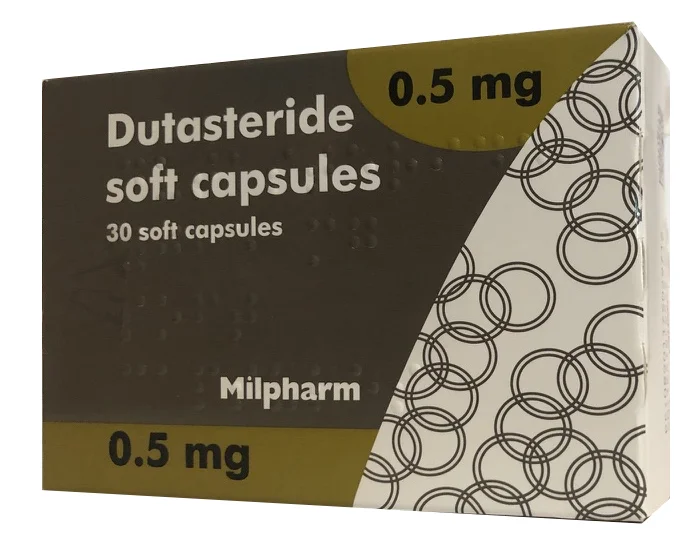
Dutasteride is a prescription medication originally developed to treat benign prostatic hyperplasia and increasingly used for male pattern hair loss. It belongs to the same class of drugs as finasteride, 5-alpha reductase inhibitors, but works more thoroughly, making it the stronger of the two options.
How dutasteride differs from finasteride
Finasteride blocks only the Type II isoenzyme of 5-alpha reductase, reducing serum DHT by around 70%. Dutasteride blocks both Type I and Type II, reducing serum DHT by 90 to 98%. The Type I enzyme is expressed in the scalp's sebaceous glands, finasteride leaves that pathway active, meaning a meaningful source of scalp DHT remains even during treatment. Dutasteride closes both routes.
In practice this means dutasteride produces greater DHT suppression, which translates to stronger hair loss stabilisation and, in many cases, better regrowth, particularly for men who haven't fully responded to finasteride.
The evidence in 2026
A 2025 Bayesian network meta-analysis of 33 randomised controlled trials ranked dutasteride 0.5mg daily as the most effective monotherapy for male androgenetic alopecia, achieving the highest efficacy score for total hair density improvement at 24 weeks.
A separate 2025 randomised controlled trial found that dutasteride taken just three times per week outperformed daily finasteride for hair density improvement, raising the possibility of achieving better results with less frequent dosing, which has practical implications for anyone managing long-term side effect exposure.
Licensing in the UK
Dutasteride is not licensed in the UK specifically for hair loss, it is licensed for benign prostatic hyperplasia. It is however widely prescribed off-label by UK hair loss specialists and dermatologists, which is entirely legal and consistent with GMC guidance on off-label prescribing where the clinical evidence supports it. It is approved for hair loss in South Korea and Japan.
The absence of a UK hair loss licence reflects regulatory and commercial history rather than any safety concern. Dutasteride has cleared the same rigorous approval process as any licensed medicine.
Side effects
The listed side effects are similar to finasteride, reduced libido, erectile changes, reduced ejaculate volume, and affect a minority of users. The key pharmacological difference is dutasteride's long half-life of around five weeks, compared to finasteride's six hours. This means that if you stop taking dutasteride, any side effects may take longer to resolve than they would with finasteride. European pharmacovigilance data suggests finasteride is not categorically safer than dutasteride in real-world reporting, despite the common assumption that the weaker drug carries lower risk.
Who it's for
Dutasteride is the evidence-backed choice for men with more aggressive hair loss, those who haven't responded adequately to finasteride after 12 months, or those who want maximum available DHT suppression from a single medication.
It is also available in topical form, our topical dutasteride combines it with 10% minoxidil in a TrichoSol base, giving dual-action DHT blocking and follicle stimulation in one scalp application.
Available forms
Avodart 0.5mg, GSK branded capsule
Generic dutasteride 0.5mg
Vegetarian dutasteride capsules, gelatin-free for patients who require it
Topical dutasteride with minoxidil
A full comparison with finasteride is in our Finasteride vs Dutasteride guide.
Topical Finasteride and Minoxidil Combined, How It Works and Who It's For
Combining finasteride and minoxidil in a single topical solution is one of the most clinically logical approaches to treating male pattern hair loss. The two ingredients work through completely different mechanisms, one blocks the hormonal driver of hair loss, the other directly stimulates follicle activity, and evidence suggests the combination produces better outcomes than either alone.
What's in it
Our compounded topical solution contains 0.1% finasteride and 5% minoxidil in a TrichoSol base. It contains no propylene glycol and no alcohol, both common irritants in standard topical formulations that cause scalp dryness, flaking and contact dermatitis in sensitive patients.
The TrichoSol base is a water-based phytocomplex that improves penetration of active ingredients into the scalp by up to 40% compared to alcohol-based carriers, meaning more of each active ingredient reaches the follicle where it can actually work.
Why combine them
Finasteride at 0.1% topical concentration blocks DHT production in the scalp, reducing the hormonal signal that causes follicle miniaturisation. Studies on topical finasteride show substantially lower systemic absorption than oral, meaning the DHT-blocking effect is largely local to the scalp rather than systemic, which is the key advantage for men who want to minimise side effect risk.
Minoxidil at 5% works independently of DHT, it prolongs the anagen growth phase of the hair cycle and increases blood flow to follicles. It works whether or not DHT is the primary driver of thinning, which makes it useful across a broader range of hair loss patterns.
Used together, you're blocking the cause of follicle miniaturisation while simultaneously stimulating growth. The clinical evidence for combination therapy consistently outperforms either monotherapy in head-to-head comparisons.
Who it's suitable for
This formulation is particularly well suited to men who want the benefits of finasteride without the systemic exposure of oral tablets, men with sensitive scalps who've found alcohol-based minoxidil irritating, and men who want to simplify their routine to a single daily application rather than separate products.
It is not suitable for women, particularly women who are pregnant or may become pregnant, due to the finasteride component.
How to use it
Apply 1ml to the affected areas of the scalp once daily. Massage in gently and allow to dry. Apply to a dry scalp, do not apply immediately after washing. Wash hands after use.
Results follow the same timeline as other finasteride and minoxidil treatments, stabilisation typically within three to six months, visible regrowth where it occurs within nine to twelve months of consistent use.
How to Order
Choose your treatment option and pay
Answer our short medical questionnaire
Our doctor issues your prescription online
We ship your hair loss medication
See also: Our complete UK hair loss treatment guide covers every option, from over-the-counter to prescription.
Medical reviewer: Dr Ahmad Moussa MB BCh, MSc, MRCS(Eng), MD, FRCS(SN), NHS Neurosurgeon and Hair Transplant Surgeon.
Published: . Last updated: . Last reviewed: . All prescription medications are dispensed by a GPhC registered UK partner pharmacy.
Disclaimer: this page is for general information only and does not constitute medical advice. Prescription treatments are not appropriate for everyone. Prescription only treatment is supplied only where a UK registered prescriber judges it clinically appropriate after reviewing your online medical questionnaire.
Related Articles
PRP for Hair Loss, Platelet Rich Plasma Treatment
29 Mar 2026
Scalp Micro Pigmentation for Men, SMP Treatment
29 Mar 2026

Oral vs Topical Minoxidil for Hair Loss: UK Guide
24 Jul 2026
Bimatoprost Eyelash Serum: How It Works, Results and Getting a Prescription in the UK
21 Jul 2026
Topical Finasteride: UK Compounded TrichoSol Formula
29 Mar 2026
Topical Melatonin for Hair Loss UK Guide
29 Sept 2026