Spironolactone for Hair Loss UK: The Complete Guide
Start here
Hair Loss Treatment UK: Complete Guide
Every UK-available treatment in one place. Read the complete guide
Spironolactone is the most commonly prescribed oral antiandrogen for female pattern hair loss in the UK. Originally licensed as a blood pressure medicine and diuretic, it is prescribed off-label for female hair loss because it blocks androgen receptors in the scalp, which reduces the hormonal signal that causes follicle miniaturisation. This guide covers every UK brand, the licensed and off-label uses, the clinical evidence, real side effect and monitoring requirements, and how oral spironolactone compares to topical alternatives like our topical spironolactone formulation.
Spironolactone is prescribed almost exclusively for women. It is not appropriate for men with pattern hair loss because at doses relevant to hair growth it causes breast tenderness and enlargement (gynaecomastia) as a class effect. Men considering an antiandrogen approach for hair loss should look at finasteride or dutasteride instead.
Spironolactone brands available in the UK
Every UK spironolactone tablet contains the same active at the same doses (25mg, 50mg, 100mg). Manufacturer and price differ; clinical effect is identical.
Aldactone (Pfizer): the original branded oral spironolactone, MHRA licensed in the UK for hypertension, heart failure and oedema. Typically the most expensive per tablet at UK retail. Same active as every generic below.
Generic spironolactone (Accord, Aristo, Teva, Milpharm and others): UK generic tablets at 25mg, 50mg and 100mg. MHRA licensed to the same clinical file as Aldactone. Widely dispensed by NHS pharmacies. Cheapest oral option in the UK.
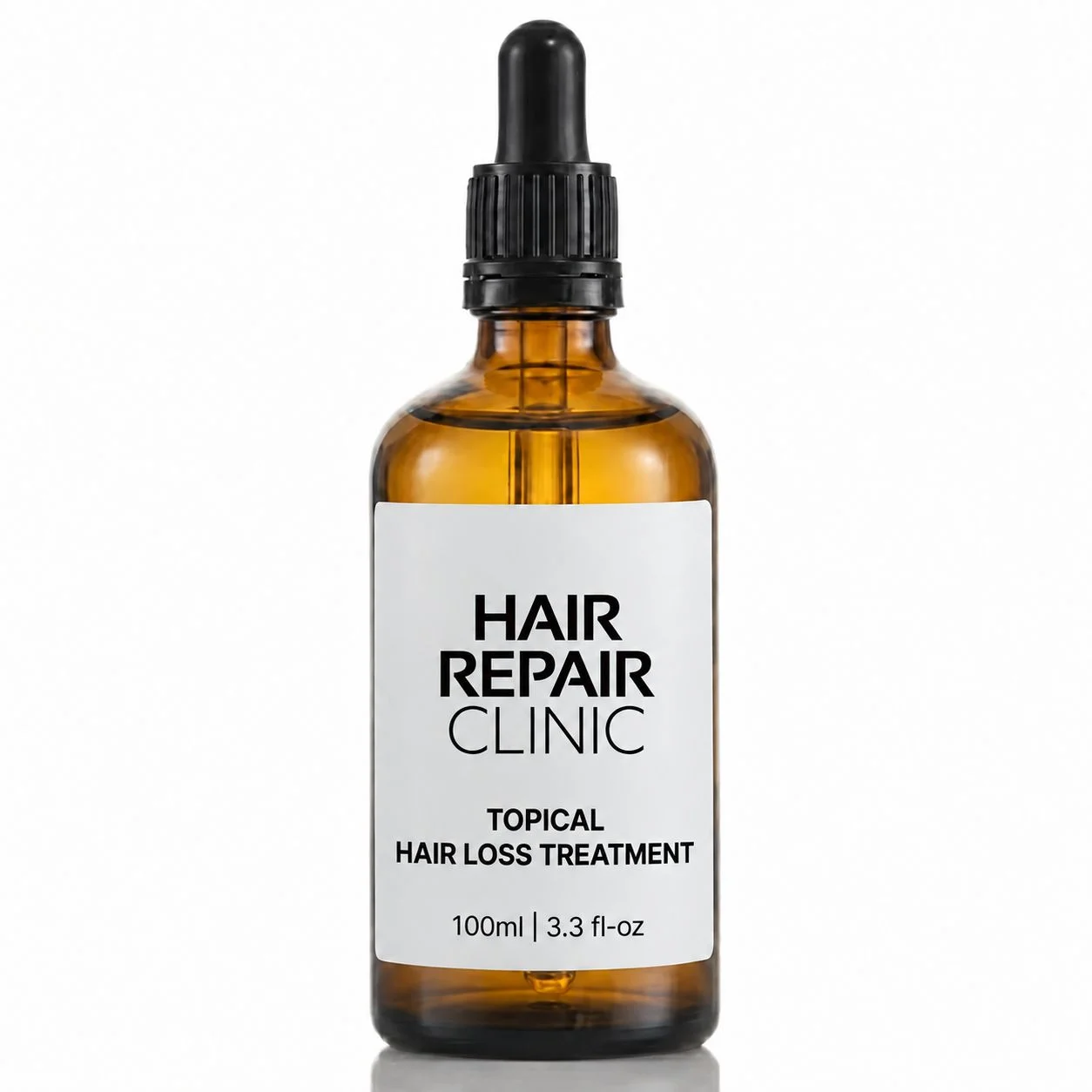
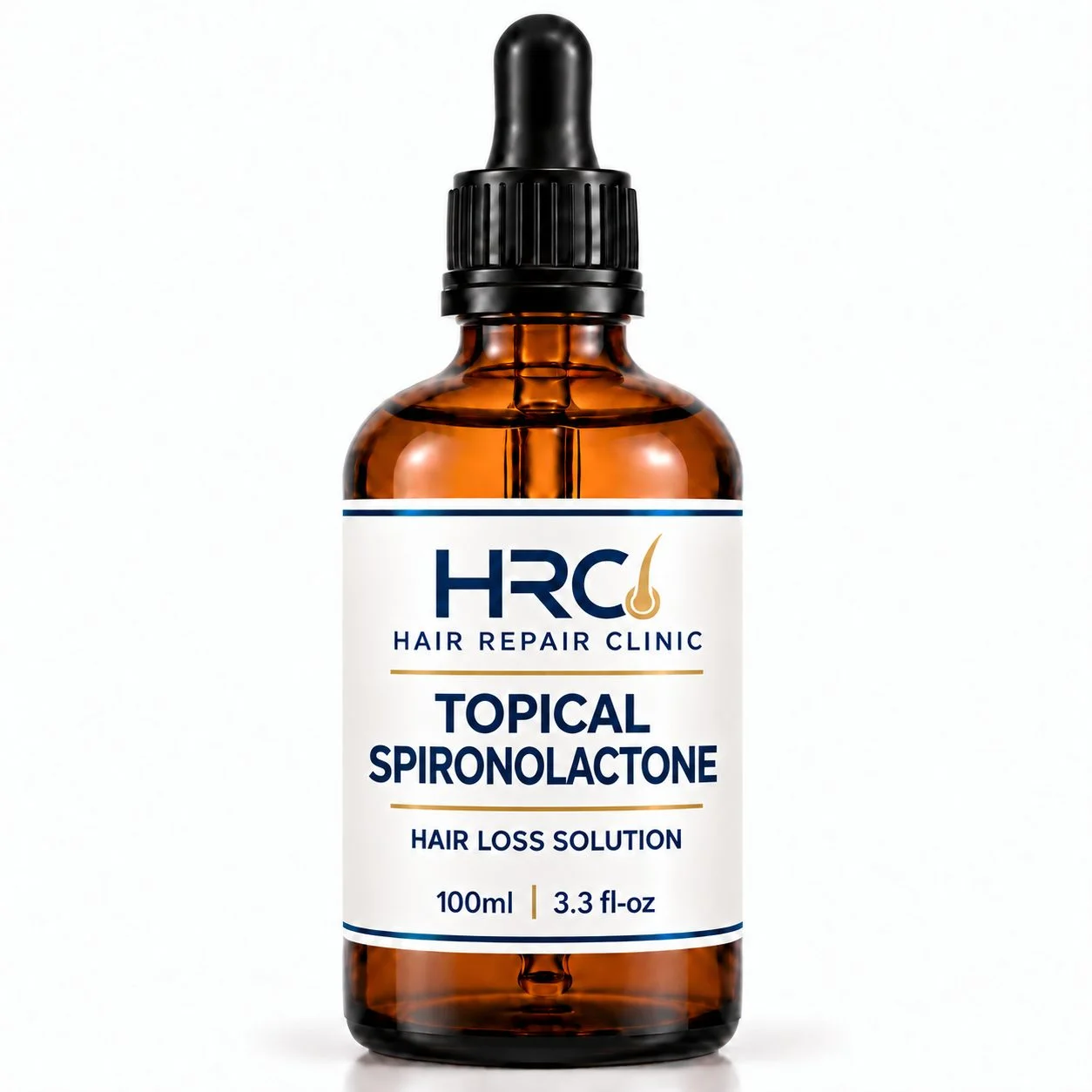
Topical spironolactone (our compounded formulation): spironolactone 2 to 5 percent in the Fagron TrichoSol base, applied to the scalp rather than swallowed. Off-label, prescription only. Lower systemic exposure than oral, so fewer side effects at similar hair count outcomes. See our topical spironolactone.
Choice between oral and topical: oral spironolactone has the deeper evidence base and stronger effect, but requires blood pressure and potassium monitoring. Topical spironolactone has lower systemic exposure and no monitoring requirement, but the evidence base is smaller. UK prescribers commonly start women on topical, moving to oral if response is inadequate at 6 to 12 months.
How spironolactone works for hair loss
Spironolactone is an androgen receptor antagonist. In plain English: the enzyme 5-alpha reductase converts testosterone into dihydrotestosterone (DHT), the hormone that binds to receptors on hair follicles and drives the miniaturisation process. Spironolactone works differently from finasteride and dutasteride: instead of reducing DHT production, it blocks the receptor that DHT binds to. Less receptor binding means less follicle miniaturisation signal, means slower or reversed pattern hair loss.
Key mechanism points:
Spironolactone occupies the androgen receptor without activating it, blocking DHT and testosterone from binding.
The effect is dose-dependent at oral doses of 50 to 200mg daily.
Serum DHT levels are unchanged (unlike on finasteride or dutasteride which lower serum DHT). The follicle response comes from receptor blockade at the scalp, not from lower circulating DHT.
Spironolactone is also a potassium sparing diuretic and aldosterone antagonist, which is why it was originally licensed for blood pressure and heart failure. These properties are what drive the electrolyte and blood pressure monitoring requirements.
Half-life of the active metabolite (canrenone) is roughly 20 hours. Effects and side effects clear from the body over about a week on stopping.
Why spironolactone works for women but not men
Male and female pattern hair loss share the same underlying mechanism (androgen sensitivity of scalp follicles) but the treatment landscape splits by sex for good reason.
For women, pattern hair loss (female pattern hair loss, FPHL) often responds to lower doses of antiandrogens than men need. Spironolactone at 50 to 200mg daily produces meaningful hair count improvements in the majority of women with FPHL. Because women have lower baseline testosterone than men, blocking the receptor at this dose produces a large relative effect on the hair follicle without dramatically affecting other androgen-dependent tissues.
For men, the same dose of spironolactone causes gynaecomastia (breast tenderness and enlargement) in a significant proportion, alongside reduced libido and other feminising effects. This is a class effect of antiandrogens at male-relevant doses. Men considering an antiandrogen approach to hair loss should use finasteride or dutasteride instead, which reduce DHT production upstream rather than blocking the receptor downstream. See our finasteride guide or dutasteride guide.
Licensed vs off-label uses in the UK
Aldactone and generic spironolactone are MHRA licensed in the UK for: primary hyperaldosteronism, congestive heart failure (with reduced ejection fraction), essential hypertension resistant to other treatments, oedema associated with heart failure and cirrhosis, malignant ascites.
Female pattern hair loss is OFF-LABEL. Spironolactone has never been granted a specific hair loss indication in the UK. Same clinical file, off-label prescribing decision by the reviewing UK prescriber.
Other common off-label uses in women: polycystic ovary syndrome (PCOS), hirsutism (excess facial or body hair), adult acne, especially hormonal jawline acne.
Off-label prescribing is legal and common practice in the UK when the prescriber judges it appropriate for the individual patient. Female pattern hair loss is a well established off-label use with 40+ years of clinical experience behind it.
Prescription only medicine (POM) in the UK. Online questionnaire reviewed by a UK GPhC registered prescriber before dispensing. Note the reviewing prescriber will check blood pressure history and typically ask for baseline potassium if you are over 45 or have any kidney concern.
Dispensed by a GPhC registered UK partner pharmacy. Every pack we sell is prepared and shipped in the UK.
Clinical evidence for spironolactone in female hair loss
The evidence base for spironolactone in female pattern hair loss is substantial but mostly observational, because randomised placebo controlled trials in this indication are rare. Key studies:
Sinclair 2005 (Australia, 80 women, 12 months): spironolactone 200mg daily produced clinical improvement in 44 percent of women with FPHL and stabilised hair loss in a further 44 percent. Only 12 percent showed continued progression. This is the trial most often cited as the benchmark for oral spironolactone at higher doses.
Sinclair et al 2015 (Australia, 100 women, 12 months): spironolactone 25 to 200mg daily combined with topical minoxidil produced clinical improvement in the majority of women, with the combination out-performing either treatment alone. This established the "spironolactone + minoxidil" combination as the standard female pattern hair loss regimen.
Famenini et al 2017 (US retrospective cohort, 166 women): spironolactone at doses of 100 to 200mg daily produced measurable hair count improvement in 74 percent of treated women over 12 to 24 months. Discontinuation rate for side effects was 15 percent, mainly menstrual disturbance and dizziness.
Adenuga et al 2012 (US clinical practice review): at the standard 100 to 200mg dose, spironolactone was well tolerated by most women, with meaningful hair count improvement at 12 months in most responders.
Topical spironolactone evidence (Yamazaki et al 2003, and smaller UK series): topical spironolactone at 5 percent applied to the scalp produced hair count improvement comparable to oral spironolactone at similar time points, without the electrolyte or blood pressure side effects. Smaller evidence base than oral, but growing.
Practical takeaway: spironolactone works for the majority of women with female pattern hair loss, particularly when combined with topical minoxidil. Higher oral doses (100 to 200mg) produce stronger effects but with more monitoring requirements. Topical spironolactone is a lower-monitoring alternative if you would rather avoid the systemic side effects.
How long spironolactone takes to work
Weeks 1 to 4: no visible hair change. May notice reduced water retention or blood pressure change if you had those issues.
Months 3 to 6: reduced shedding is the first sign the treatment is working. Hair count improvements are still weeks away.
Months 6 to 12: first visible thickness and hair count improvements. Full effect judged at 12 months of consistent daily use.
Months 12 to 24: continued gradual improvement in responders. Peak effect at 18 to 24 months.
On stopping: hair gains are lost over 6 to 12 months as the androgen receptor blockade wears off and the previous pattern resumes.
Spironolactone is a maintenance treatment, not a course. Any gains persist only while treatment continues. If you are considering pregnancy, you must stop spironolactone at least one full menstrual cycle before trying to conceive (see contraindications below).
Side effects: the honest picture
Spironolactone is generally well tolerated in women at hair loss doses. Reported side effects, in order of frequency:
Menstrual irregularity: reported by 20 to 30 percent of women in the published cohorts. Usually irregular timing or lighter periods; occasionally heavier or breakthrough bleeding. Often settles by month 3 of treatment. Combined oral contraceptive helps stabilise the cycle for women on higher doses.
Breast tenderness: reported by 5 to 10 percent of women at hair loss doses. Usually mild and settles by month 3.
Increased urination (diuretic effect): particularly in the first weeks. Tends to settle as the body adjusts.
Dizziness or low blood pressure: more common if you already have low or normal blood pressure at baseline. Report to your prescriber if it interferes with daily activity.
Elevated potassium (hyperkalaemia): uncommon at hair loss doses in otherwise healthy women, but the reason baseline blood testing is recommended for women over 45 or with any kidney concern. Symptoms include muscle weakness, palpitations, or unusual tingling. Report immediately.
Fatigue: uncommon, usually settles as the body adjusts to the diuretic effect.
On monitoring: the classic prescribing pattern is to check blood pressure and (if any risk factor) serum potassium at baseline, then again at 4 to 6 weeks and 3 to 6 months. Otherwise no routine monitoring is required. Report new symptoms rather than waiting for a scheduled check.
Contraindications and who should NOT take spironolactone
Pregnancy or planned pregnancy within the next 3 months. Spironolactone is teratogenic in animal studies and there is a theoretical risk of feminising effects on a male foetus. Stop at least one full menstrual cycle before trying to conceive.
Breastfeeding. Spironolactone and its metabolites pass into breast milk at low but detectable levels. UK prescribers typically avoid or discontinue during breastfeeding.
Anyone with kidney impairment (moderate to severe). The kidneys clear spironolactone; impaired function raises the risk of hyperkalaemia. Discuss with your prescriber if you have any kidney condition.
Existing hyperkalaemia or on medicines that raise potassium. Includes ACE inhibitors (ramipril, lisinopril), ARBs (losartan, candesartan), other potassium sparing diuretics, and potassium supplements. Not absolutely forbidden but requires prescriber review and monitoring.
Addison disease or adrenal insufficiency. Spironolactone blocks aldosterone, which is what these patients already lack.
Men with pattern hair loss. Not clinically appropriate at hair loss doses. Use finasteride or dutasteride instead.
Women taking a combined oral contraceptive who smoke and are over 35. Standard COCP contraindication, not spironolactone specific; discuss with prescriber.
The medical questionnaire at checkout screens for all of the above. If any apply, the prescriber will either decline or contact you to discuss.
Spironolactone vs the alternatives
Spironolactone (this guide): the first-line oral antiandrogen for female pattern hair loss in the UK. Blocks androgen receptors at the follicle. Requires monitoring at higher doses.
Topical minoxidil: different mechanism (growth stimulator, not antiandrogen). The classic evidence-backed female regimen is oral spironolactone plus topical minoxidil 2 or 5 percent. See our minoxidil UK guide.
Oral minoxidil (2.5mg or lower for women): alternative growth stimulator if topical minoxidil has been poorly tolerated. Off-label for hair loss. Different mechanism, so can be combined with spironolactone.
Topical spironolactone: the same active applied to the scalp. Lower systemic exposure, no electrolyte or blood pressure monitoring. See our topical spironolactone.
Finasteride and dutasteride: block DHT production upstream instead of blocking the receptor. Used more commonly in men. In post-menopausal women, finasteride 2.5 or 5mg has some evidence and is prescribed off-label under specialist supervision.
Melatonin: a mild antioxidant support product, not a first-line female pattern hair loss treatment. Often added as an adjunct to a spironolactone or minoxidil regimen.
Dosage
Standard oral dosing for female pattern hair loss in the UK is 50 to 200mg daily, usually taken as a single dose or split as two smaller doses to reduce the diuretic effect. Common practice is to start low (50mg daily) and titrate up over 4 to 8 weeks to tolerance, aiming for 100 to 200mg for a full antiandrogen effect.
Take with food to reduce the risk of stomach upset. Timing is best in the morning or early afternoon to avoid disrupting sleep with the diuretic effect. Consistency matters more than the specific time; missing occasional days is fine, missing multiple days per week erodes the response.
Topical spironolactone is applied at 1ml daily to the affected areas of the scalp. Same technique as topical minoxidil or topical finasteride. See our topical application guide.
Storage and shelf life
Store at room temperature (below 25°C), away from direct sunlight and moisture.
Keep tablets in their original blister pack or bottle until you take them.
Sealed pack expiry is on the label (typically 24 to 36 months from manufacture). Do not use after the printed expiry date.
Keep out of reach of children, pets, and anyone pregnant or planning pregnancy.
Topical spironolactone has a shorter open bottle life. Follow the storage guidance on the dispensing label.
Excipients: what is in a spironolactone tablet
Active: spironolactone 25mg, 50mg or 100mg. Typical excipients in UK generic spironolactone tablets:
Lactose monohydrate as the primary filler. If you are severely lactose intolerant, ask your prescriber about lactose-free brands.
Maize starch, calcium sulphate, magnesium stearate as tablet binders and lubricants.
Peppermint oil in some brands to mask the sulphurous taste (spironolactone contains a sulphur group that has a distinctive smell).
Talc, hypromellose, titanium dioxide and other iron oxide colours in the film coating (varies by brand and strength).
The full excipient list is on the manufacturer Patient Information Leaflet enclosed with your medicine. Brands vary; if you have a known excipient allergy, tell your prescriber before ordering.
Regulatory status in the UK
Aldactone 25mg, 50mg and 100mg are MHRA licensed for hypertension, heart failure and oedema. Generic spironolactone tablets are MHRA licensed to the same clinical file.
Female pattern hair loss is off-label. Prescribers may prescribe off-label when clinically appropriate. The online questionnaire is mandatory for this reason.
UK prescriber review included at checkout. The reviewing prescriber will typically request baseline blood pressure and (if any risk factor) baseline serum potassium before dispensing higher doses.
Topical spironolactone is a compounded Special, prescribed to individual patient order under Section 10 exemption rules. Off-label indication, prescription only.
Dispensed by a GPhC registered UK partner pharmacy. Every pack we sell is prepared and shipped in the UK.
Patient Information Leaflets and further reading
Aldactone 25mg PIL (medicines.org.uk): the branded manufacturer patient information leaflet.
NHS: Spironolactone: NHS patient information page.
NICE CKS: Hair loss (androgenetic pattern): UK clinical summary.
Every pack we dispense ships with the manufacturer PIL enclosed. Always read the leaflet supplied with your medicine, and contact your prescriber or the pharmacy if anything is unclear.
Our spironolactone treatments
Next steps
Spironolactone is a prescription medicine used off-label to treat female pattern hair loss. In its oral form, originally developed as a potassium-sparing diuretic for high blood pressure and heart failure, it has a secondary action as an androgen receptor blocker, reducing the effect of DHT at the follicle rather than its production. This is why it is prescribed off-label at 50 to 200mg daily for women with androgenetic hair loss, or as a topical compounded solution for those who want local action without systemic exposure. In the UK, spironolactone is licensed as Aldactone for cardiovascular indications and prescribed off-label for female hair loss on individual clinical assessment.
For the broader UK landscape and how spironolactone fits with topical and combination approaches, see our complete UK hair loss treatment guide. Considering the classic female regimen (spironolactone plus topical minoxidil)? See our minoxidil UK guide. Looking at antiandrogens as a family? Read our finasteride guide or dutasteride guide for the male alternatives.
Medical reviewer: Dr Ahmad Moussa MB BCh, MSc, MRCS(Eng), MD, FRCS(SN), NHS Neurosurgeon and Hair Transplant Surgeon.
Published: . Last updated: . Last reviewed: . All prescription medications are dispensed by a GPhC registered UK partner pharmacy.
Disclaimer: this page is for general information only and does not constitute medical advice. Prescription treatments are not appropriate for everyone. Prescription only treatment is supplied only where a UK registered prescriber judges it clinically appropriate after reviewing your online medical questionnaire.
Related Articles
Topical Melatonin for Hair Loss UK Guide
29 Sept 2026

Best Age for a Hair Transplant: Is It Too Early or Too Late?
15 Feb 2025
How Much Does a Hair Transplant Cost in the UK?
15 Feb 2025

Why Do Some Hair Transplants Look Bad? (And How to Avoid It)
15 Feb 2025

Celebrities Who Had Hair Transplants: Before; After
15 Feb 2025
How Long Do Hair Transplants Last? (And Do They Always Work?)
15 Feb 2025