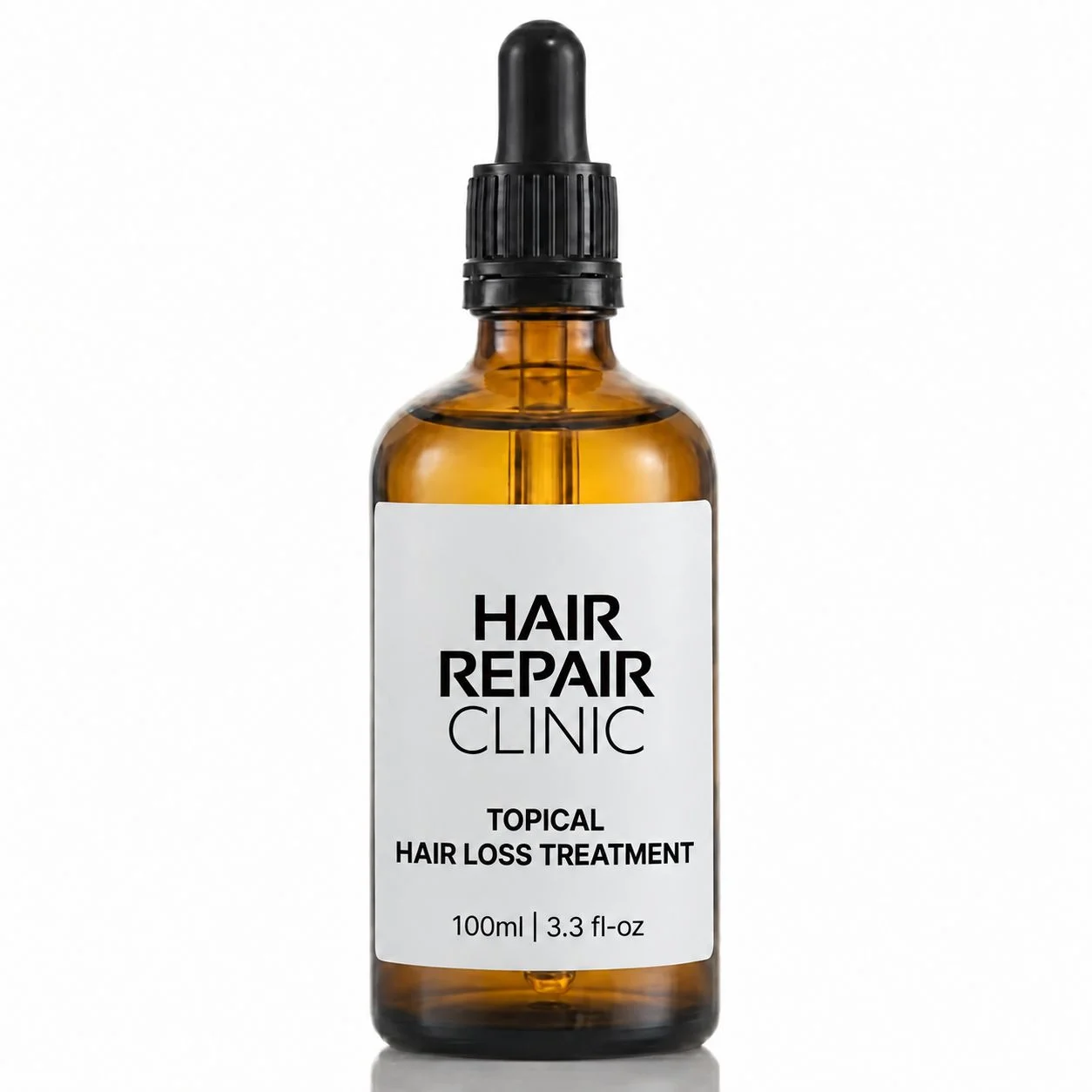
Topical Melatonin for Hair Loss UK Guide
Start here
Hair Loss Treatment UK: Complete Guide
Every UK-available treatment in one place. Read the complete guide
Topical melatonin is an antioxidant serum applied to the scalp, used most often as an adjunct in female pattern hair loss and diffuse thinning. Melatonin is best known as the sleep hormone your brain produces at night, but the same molecule applied to the skin has anti-inflammatory and antioxidant effects on the hair follicle. This guide covers our topical melatonin, the clinical evidence, dosing, side effects, and where topical melatonin fits alongside minoxidil and DHT blockers.
Critical up front: melatonin is not a DHT blocker. It does not reduce DHT and does not block the androgen receptor. That is important because most pattern hair loss is driven by DHT sensitivity at the follicle, and melatonin does not address that mechanism. Topical melatonin is a scalp support product that improves the environment your other hair loss treatments work in. It is not a substitute for finasteride or dutasteride in men, or spironolactone in women. Best used as part of a stack, not as a standalone.
Topical melatonin products available in the UK
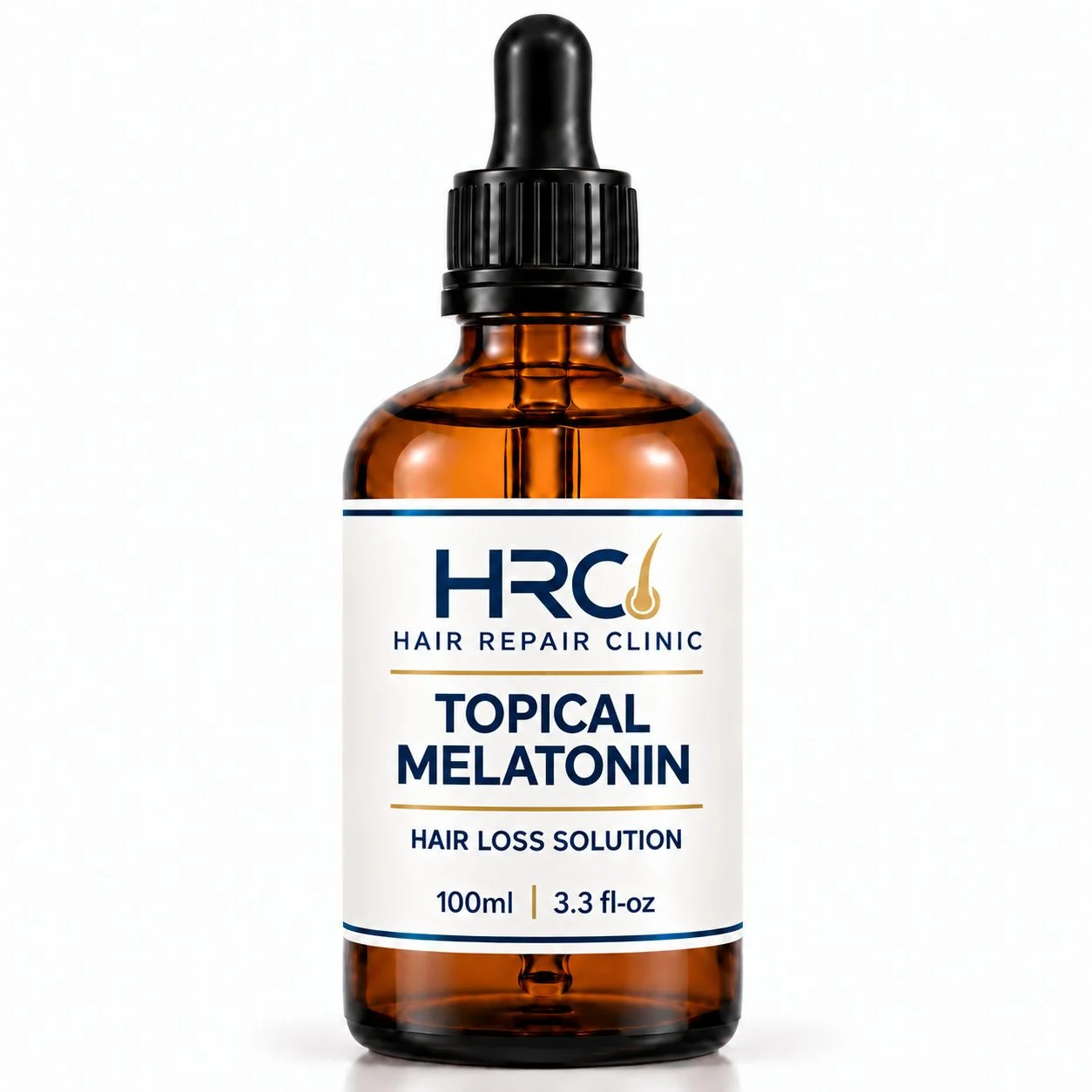
Topical melatonin (our compounded formulation): melatonin 0.1 percent in the Fagron TrichoSol base, applied 1ml daily to the scalp. Low irritation, propylene glycol free vehicle designed for sensitive scalps. Prescription only in the UK because it is dispensed as a compounded Special. See our topical melatonin product page.
Asence Pharma topical melatonin (European brand): the branded 0.1 percent melatonin solution studied in the Fischer 2012 trial (see clinical evidence below). Sold in continental Europe under prescription. Not available on the UK market as a shelf-ready branded product.
OTC scalp serums claiming melatonin content: some cosmetic hair serums list melatonin among their ingredients at low concentrations. These do not have the same clinical evidence as prescription 0.1 percent topical melatonin, and the actual melatonin content is often not disclosed. Not a substitute for a compounded prescription formulation.
Oral melatonin (Circadin and generics): licensed in the UK as a short-term sleep aid at 2mg controlled-release. There is no clinical evidence supporting oral melatonin for hair loss, and the sleep-inducing side effect at oral doses is significant. Do not use oral melatonin as a hair loss treatment.
How topical melatonin works for hair
The mechanism of topical melatonin at the hair follicle is different from its systemic role as a sleep hormone. When applied to the scalp:
Antioxidant effect at the follicle. Melatonin is a potent scavenger of reactive oxygen species. Oxidative stress in the scalp is one contributor to premature follicle senescence and miniaturisation.
Anti-inflammatory effect on the follicle environment. Melatonin reduces local inflammatory markers around the follicle, which is relevant in seborrhoeic scalp and diffuse thinning.
Small effect on follicle cycling. Some research suggests topical melatonin extends the anagen (active growth) phase modestly, similar to a mild version of what minoxidil does through a different mechanism.
Local not systemic. Applied to the scalp, topical melatonin does not raise blood melatonin to sleep-inducing levels. The dose delivered is orders of magnitude lower than the sleep dose of oral melatonin.
What melatonin does NOT do at the follicle: it does not reduce DHT (the hormone that shrinks follicles in pattern hair loss), does not block androgen receptors, and does not stimulate growth in the same way minoxidil does. Its role is supportive, not primary.
Licensed vs off-label uses in the UK
Topical melatonin is NOT MHRA licensed as a hair loss treatment in the UK. There is no branded topical melatonin product with a UK hair loss indication.
Compounded topical melatonin is prescribed off-label under Section 10 exemption rules for compounded medicines. Legal, common practice for female pattern hair loss and diffuse thinning where a scalp support product is wanted.
Oral melatonin (Circadin 2mg) is MHRA licensed for short-term treatment of insomnia in adults over 55. Not licensed or effective for hair loss.
Prescription only medicine (POM) in the UK for the compounded topical formulation. The online questionnaire is reviewed by a UK GPhC registered prescriber before dispensing.
Dispensed by a GPhC registered UK partner pharmacy. Every bottle we sell is prepared and shipped in the UK.
Clinical evidence for topical melatonin in hair loss
The evidence base for topical melatonin is smaller than for finasteride, dutasteride, minoxidil or spironolactone. It is best characterised as promising but not yet strong. Key studies:
Fischer et al 2004 (Germany, 40 women, 6 months): topical melatonin 0.1 percent solution applied once daily produced significant reduction in hair loss severity as measured by trichogram, particularly in women with diffuse alopecia. This was the trial that established topical melatonin as a plausible adjunct treatment.
Fischer et al 2012 (Germany + Sweden, 35 men and women): repeated the 2004 protocol at 6 months. Confirmed hair count improvements and increased anagen (growth) phase ratio. Effect strongest in women with androgenetic alopecia and men in early Norwood stages.
Sarno et al 2018 (Italy, 65 patients with androgenetic alopecia): topical melatonin combined with topical minoxidil produced better hair count outcomes than minoxidil alone at 6 months, particularly in the frontal scalp. Established melatonin as a useful add-on rather than a monotherapy.
Yamazaki et al 2003 (Japan, animal + human pilot): demonstrated the antioxidant mechanism of topical melatonin on the hair follicle in cellular assays and confirmed the safety profile in a small human cohort.
Practical takeaway: topical melatonin has a small but consistent effect on hair count in the published trials, particularly when combined with topical minoxidil. It is not a primary treatment for pattern hair loss; it is a useful adjunct that adds antioxidant support to a proper regimen.
How long topical melatonin takes to work
Weeks 1 to 4: no visible change. No shedding phase (unlike minoxidil).
Months 3 to 6: reduced shedding may be the first visible sign in responders. Effect is subtler than minoxidil.
Months 6 to 12: peak effect. Fischer trials measured outcomes at 6 months, so this is the standard timeframe for judging response.
Beyond 12 months: some responders continue to improve gradually, particularly if combined with minoxidil.
On stopping: any improvements are lost gradually over 6 to 12 months as the antioxidant support is withdrawn.
Side effects: the honest picture
Topical melatonin is one of the best tolerated hair loss treatments in the UK. Reported side effects in the published trials are minimal:
Local scalp irritation, dryness, or redness: uncommon and usually caused by the vehicle rather than the melatonin itself. Our topical melatonin uses the TrichoSol base to minimise this.
No sedating effect. The dose of melatonin delivered by 1ml of a 0.1 percent solution applied to the scalp is orders of magnitude below the oral dose that causes drowsiness. Topical melatonin does not affect sleep timing or quality.
No hormonal effects. Unlike spironolactone or finasteride, topical melatonin does not have hormonal effects on the body.
No known drug interactions at topical hair loss doses.
Pregnancy and breastfeeding: not enough data for a firm safety statement. UK prescribers typically avoid or discontinue topical melatonin during pregnancy and breastfeeding as a precaution.
The tolerability profile is why topical melatonin is often used in people who cannot tolerate minoxidil or who want to avoid the hormonal effects of oral antiandrogens.
Melatonin vs the alternatives: where it fits
vs Topical minoxidil: different mechanisms (antioxidant vs potassium channel opener). Minoxidil has stronger evidence and more effect on hair count. Melatonin combined with minoxidil out-performed minoxidil alone in the Sarno 2018 trial. Best used together, not as an either-or.
vs Finasteride or dutasteride: completely different mechanisms. Fin and dut block DHT; melatonin does not. For pattern hair loss in men, a DHT blocker is needed for meaningful stabilisation. Melatonin cannot replace this role, but can be added on top for antioxidant support.
vs Spironolactone: also different mechanisms. Spironolactone blocks androgen receptors; melatonin is an antioxidant. In female pattern hair loss, spironolactone or topical fin has stronger evidence for the hormonal side; melatonin adds support without hormonal effect. Can be combined.
vs OTC hair growth supplements: most OTC hair vitamins (biotin, collagen, marine complex) have weak or no evidence for pattern hair loss. Topical melatonin has trial evidence at 0.1 percent, which OTC products do not match.
The typical female regimen with melatonin included: topical minoxidil 2 or 5 percent + oral spironolactone 50 to 200mg + topical melatonin as an antioxidant adjunct. The Sarno 2018 evidence supports this stacking.
Dosage
Standard topical melatonin dosing for hair loss:
1ml of a 0.1 percent solution applied once daily to the scalp. This is the dose used in the Fischer trials.
Apply in the evening, ideally 4 hours before your next scalp wash to allow full absorption.
Even distribution to the affected areas using the dropper. Same technique as topical minoxidil or topical finasteride. See our topical application guide.
Higher concentrations (0.2 or 0.5 percent) have been used experimentally but do not have the same trial evidence as 0.1 percent. Not recommended without prescriber guidance.
Oral melatonin is not indicated for hair loss at any dose. The sedating effect is significant at doses that would even theoretically reach the scalp in useful concentrations.
Storage and shelf life
Store at room temperature (below 25°C), away from direct sunlight and moisture. Do not freeze.
Keep the bottle sealed between uses.
Sealed bottle expiry is on the dispensing label. Once opened, use within the recommended timeframe on the label (typically 6 months for the compounded TrichoSol formulation).
Do not decant into unlabelled bottles.
Keep out of reach of children and pets.
Excipients: what is in our topical melatonin
Active ingredient: melatonin 0.1 percent w/v. Vehicle: Fagron TrichoSol base. Typical composition:
Ethoxydiglycol and purified water as the primary solvents in TrichoSol. Gentler on sensitive scalps than the alcohol and propylene glycol vehicles used in OTC minoxidil products.
Low ethanol content to keep the melatonin in solution.
No propylene glycol. Standard hair loss solutions use 50+ percent propylene glycol as the vehicle, which is the single most common cause of scalp irritation. TrichoSol is propylene glycol free.
See our TrichoSol explainer for the full vehicle ingredient list.
Regulatory status in the UK
Topical melatonin is a prescription only medicine (POM) in the UK as a compounded product. There is no MHRA licensed hair loss indication.
Compounded topical melatonin is prescribed off-label as a Special under Section 10 exemption rules. Legal, common in specialist practice for female pattern hair loss.
Oral melatonin (Circadin 2mg) is MHRA licensed for short-term insomnia in adults over 55. Not for hair loss.
UK prescriber review included at checkout. The reviewing prescriber will confirm topical melatonin is appropriate for you and check for contraindications.
Dispensed by a GPhC registered UK partner pharmacy. Every bottle is prepared and shipped in the UK.
Patient Information Leaflets and further reading
NHS: Melatonin: NHS patient information page (covers the oral sleep indication; hair loss is not mentioned as it is off-label).
NICE CKS: Hair loss (androgenetic pattern): UK clinical summary for male and female pattern hair loss management (melatonin covered as adjunct only).
Every bottle we dispense ships with the dispensing label information. Always follow the instructions on the label, and contact your prescriber or the pharmacy if anything is unclear.
Our topical melatonin
Next steps
Topical melatonin is a serum applied directly to the scalp and used off-label as an adjunct to minoxidil and 5-alpha reductase inhibitors in male and female pattern hair loss. It is thought to work by reducing oxidative stress and inflammation around the hair follicle, and by prolonging the anagen (active growth) phase of the hair cycle, rather than by blocking DHT. In the UK there is no MHRA-licensed oral or topical melatonin for hair loss; the formulations used are compounded to prescription by a UK registered pharmacy, typically at 0.0033 to 0.1 percent in a solution or serum.
Considering the classic female regimen (spironolactone plus topical minoxidil plus topical melatonin as an adjunct)? See our spironolactone UK guide and minoxidil UK guide. For the broader UK landscape and where melatonin fits, see our complete UK hair loss treatment guide. Looking for a topical stack in one bottle? Our Custom Topical Solution lets you combine melatonin, minoxidil, tretinoin and other actives into a single 100ml formula.
Medical reviewer: Dr Ahmad Moussa MB BCh, MSc, MRCS(Eng), MD, FRCS(SN), NHS Neurosurgeon and Hair Transplant Surgeon.
Published: . Last updated: . Last reviewed: . All prescription medications are dispensed by a GPhC registered UK partner pharmacy.
Disclaimer: this page is for general information only and does not constitute medical advice. Prescription treatments are not appropriate for everyone. Prescription only treatment is supplied only where a UK registered prescriber judges it clinically appropriate after reviewing your online medical questionnaire.
Related Articles
Spironolactone for Hair Loss UK: The Complete Guide
29 Sept 2026

Best Age for a Hair Transplant: Is It Too Early or Too Late?
15 Feb 2025
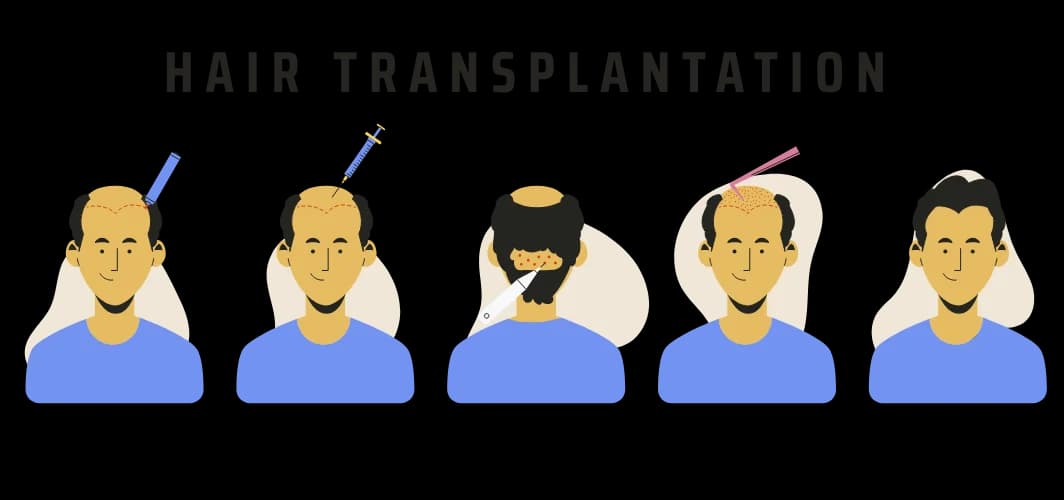
How Much Does a Hair Transplant Cost in the UK?
15 Feb 2025

Why Do Some Hair Transplants Look Bad? (And How to Avoid It)
15 Feb 2025

Celebrities Who Had Hair Transplants: Before; After
15 Feb 2025
How Long Do Hair Transplants Last? (And Do They Always Work?)
15 Feb 2025