Bimatoprost Eyelash Serum: How It Works, Results and Getting a Prescription in the UK
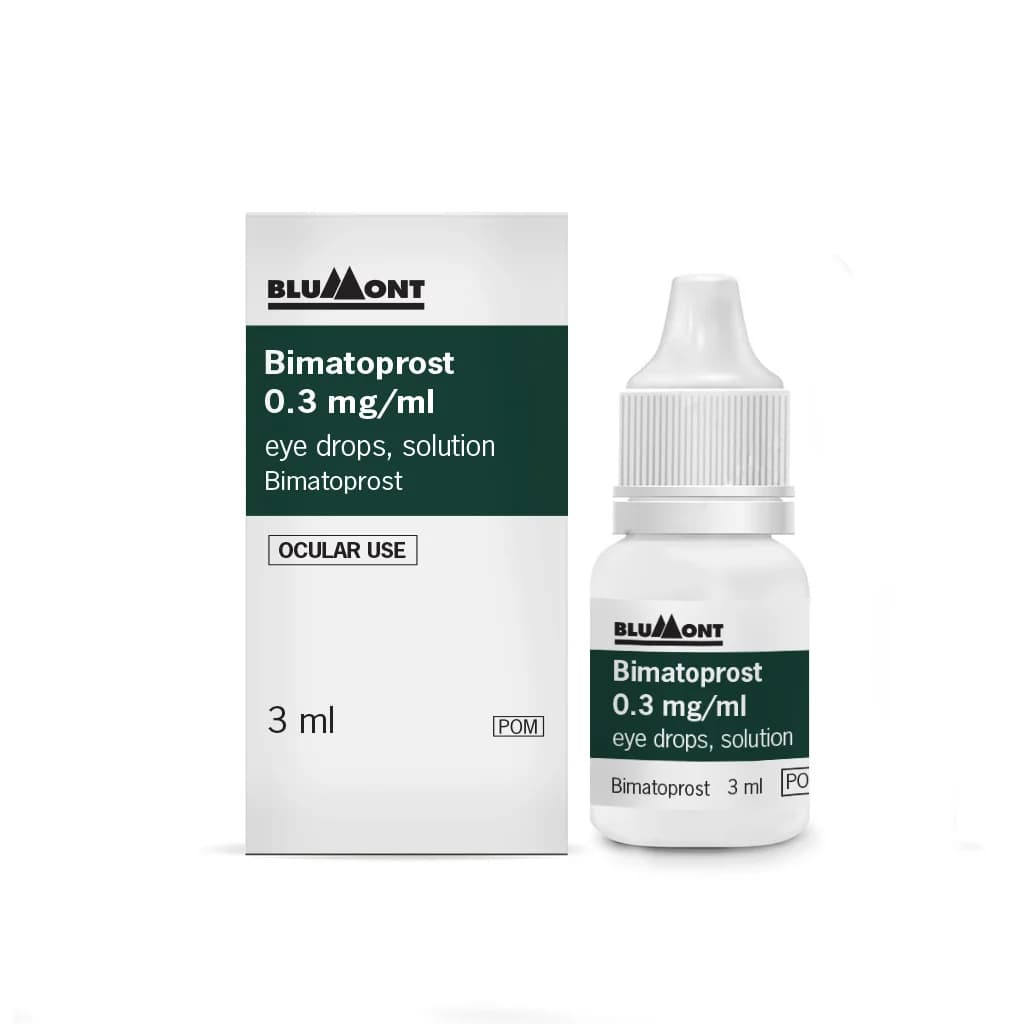
Bimatoprost is a prescription eyelash serum that grows longer, thicker and darker eyelashes by prolonging the anagen (active growth) phase of each eyelash cycle and enlarging the follicle, a mechanism it originally gained as the glaucoma eye drop Lumigan. Bimatoprost is the active ingredient in every prescription eyelash growth serum sold in the UK. It is the same molecule whether the bottle says Lumigan, Latisse, Eyreida, Bimat or Careprost. What changes between brands is the licensing, the manufacturer, the applicator and the price per month, not the drug itself.
This guide covers every UK brand, licensed and off-label uses, the Lumigan versus Latisse pricing story, how to apply safely, expected timeline, side effects, contraindications, storage, the clinical evidence and the MHRA regulatory position. Written for people considering bimatoprost for lash growth (or a partner asking on their behalf) who want the full picture before ordering.
Bimatoprost brands sold in the UK
All the bottles below contain bimatoprost 0.03% as the active. What differs is who makes them, where they are licensed and what applicator ships in the box.
Lumigan (Allergan / AbbVie): the original UK licensed brand. Licensed in the UK for glaucoma and ocular hypertension since 2002. In the UK we dispense it as a 3ml dropper bottle for daily use. Used off-label for eyelash growth by applying the same drop to the upper lash line rather than the eye. See our Lumigan Eyelash Serum.
Latisse (Allergan / AbbVie, US brand): identical bimatoprost 0.03% to Lumigan, from the same manufacturer group. Latisse is the US brand licensed by the FDA specifically for eyelash growth (hypotrichosis of the eyelashes) in 2008. Ships with sterile single-use applicator brushes. Not sold as Latisse in the UK. UK customers who want the branded Latisse experience typically buy Lumigan and add sterile brush applicators separately.
Eyreida: a UK dispensed bimatoprost 0.03% eyelash serum, same active as Lumigan and Latisse, marketed specifically for eyelash growth. Positioned as the specific eyelash indication brand for UK patients. Currently available as our Eyreida bimatoprost serum.
Generic bimatoprost 0.03%: bioequivalent generics from various manufacturers, most commonly Sun Pharmaceutical (India), often sold under names like Bimat or Careprost in international markets. Sold in the UK as generic bimatoprost for eyelash growth at lower cost than Lumigan.
How bimatoprost grows eyelashes
Bimatoprost is a prostaglandin analog. In the eye, it lowers intraocular pressure (the licensed use for glaucoma). On the hair follicle, it works by a different pathway: it extends the anagen (active growth) phase of the eyelash cycle, converts more vellus (fine) hairs to terminal (thick) hairs, and increases the pigment produced by the follicle. The result at 12 to 16 weeks of nightly use is longer, thicker and darker lashes.
Mechanism is separate from minoxidil (a potassium channel opener). Prostaglandin analogs like bimatoprost are the reason eyelash serums work where nothing else has produced the same effect. There is currently no over the counter product that matches bimatoprost for lash growth, because the OTC prostaglandin analog derivatives (isopropyl cloprostenate in some cosmetic serums) are much weaker and are not consistent in clinical response.
Licensed vs off-label uses in the UK
Bimatoprost has one MHRA licensed use in the UK: reducing intraocular pressure in adults with open-angle glaucoma or ocular hypertension. It is licensed as Lumigan 0.03% and Lumigan 0.01% eye drops.
Eyelash growth (specifically hypotrichosis, meaning inadequate or thin eyelashes) is an off-label use of bimatoprost in the UK. Off-label prescribing is legal and common in UK practice when the prescriber judges that the medicine is appropriate for the individual patient. In the United States, bimatoprost 0.03% is separately FDA licensed for eyelash growth under the brand name Latisse (since 2008). The UK has never granted a specific eyelash growth licence, so all UK eyelash serum bimatoprost is prescribed off-label under the Section 10 exemption rules for compounded medicines or as Lumigan repurposed to the upper lash line.
This has practical consequences at the checkout: because eyelash growth is off-label, a UK GPhC registered prescriber must review your medical history to confirm bimatoprost is appropriate for you before dispensing. The online questionnaire at checkout takes care of this.
Lumigan vs Latisse: the pricing story
Same drug, same manufacturer group, same 0.03% strength. The price difference comes from the licensing situation and the applicator packaging. In the US, a monthly Latisse pack (with sterile applicator brushes) sells for $150 to $180 at prescription pharmacies. In the UK, the equivalent Lumigan bottle plus separate brush applicators typically comes in at £40 to £45 for a 3ml bottle that lasts 4 to 6 weeks of nightly use.
If you have seen Latisse discussed on Instagram, Reddit or TikTok and thought about ordering: our Lumigan Eyelash Serum is the UK equivalent at a fraction of the US Latisse price. Same active, same manufacturer, dispensed by a UK GPhC registered pharmacy after prescriber review. No international shipping, no import risk, no US prescription hoops.
Strengths and forms
Bimatoprost is sold in the UK in two strengths and one form:
Bimatoprost 0.03% (300 micrograms per millilitre): the standard strength for both glaucoma treatment and eyelash growth. This is what every UK eyelash serum contains. This is the strength used in every Latisse trial in the US.
Bimatoprost 0.01%: a lower strength Lumigan formulation for glaucoma patients who had irritation on the 0.03%. Not typically used for eyelash growth because the clinical evidence for lash growth was all built at 0.03%.
Form is always a sterile eye drop solution. There is no bimatoprost cream, foam or oral tablet. The solution is either applied to the eye (glaucoma) or to the upper lash line with a small brush or the tip of the dropper (eyelash growth).
How to apply bimatoprost safely for eyelash growth
The application technique for eyelash growth differs from the glaucoma technique. For eyelash growth:
Remove eye makeup and clean the lash line. Contact lenses out. Skin around the eye dry.
One drop of bimatoprost on the applicator brush (or on the tip of the sterile eyeliner brush). One drop is enough for both upper lids.
Apply once nightly to the UPPER lash line only, in a single stroke as if applying eyeliner. Do NOT drip the bimatoprost directly into the eye. Do NOT apply to the lower lash line (this is where periorbital skin darkening tends to develop).
Blot any excess that runs onto the skin below the lash line with a tissue. Wash your hands after application.
Reinsert contact lenses at least 15 minutes after application, not immediately.
Use a fresh applicator brush each night if using disposable brushes. Do not reuse a brush between eyes if there is any active infection or stye.
The eyelash growth dose is much lower than the glaucoma dose and does not enter the eye at meaningful concentrations, so intraocular pressure effects are not expected at eyelash growth doses. This is a documented safety advantage of the brush application versus direct instillation.
Results timeline
Weeks 1 to 4: no visible change. Bimatoprost is beginning to shift new lash follicles into anagen phase.
Weeks 4 to 8: first visible thickening at the base of the lashes. New growth appears near the lash line.
Weeks 8 to 16: length and darkness increase noticeably. This is when most users first receive comments from partners or friends.
Weeks 16+: full expected result. Continue nightly for maintenance.
On stopping: lashes return to their previous length and thickness over 8 to 12 weeks as new lashes cycle through without the bimatoprost prompt. This is why bimatoprost is a continuous use product, not a course.
Side effects
Bimatoprost is generally well tolerated at eyelash growth doses. Reported side effects, in order of frequency:
Ocular irritation, itching or redness (up to 4% in Latisse trials): usually mild and settles with continued use or a temporary application break. If severe, stop use and see your prescriber.
Skin darkening on the eyelid (periorbital hyperpigmentation, up to 3%): usually reversible on stopping, but can take months. Most common when bimatoprost is applied to the lower lid or below the lash line. Applying only to the upper lash line, in a thin single stroke, minimises this risk.
Iris colour change (rare, mostly reported at glaucoma doses which are much higher than eyelash doses): permanent darkening of the iris, more likely if the iris is mixed colour (green/hazel) than pure blue or brown. Not documented at eyelash growth doses, but is included on the safety information because it is a known effect at glaucoma doses.
Eye dryness: manageable with lubricating eye drops during treatment.
Reduced intraocular pressure: at eyelash growth doses this is negligible, but people already on glaucoma treatment should tell their prescriber before starting bimatoprost for lashes.
Who should not use bimatoprost for eyelash growth
Pregnant or breastfeeding women (bimatoprost is contraindicated in pregnancy; no confirmed safety data for lash use).
Anyone with active eye infection, uveitis, or macular oedema.
Anyone with a history of retinal detachment or eye surgery in the last 3 months.
Anyone already using a topical prostaglandin analog for glaucoma (would double up the drug).
Under 18s (no eyelash growth safety data in children).
The medical questionnaire at checkout screens for all of the above. If any apply to you, the prescriber will either decline or contact you to discuss.
Storage and shelf life
Store at room temperature, below 25°C, away from direct sunlight. Do not freeze.
A sealed 3ml bottle carries the manufacturer expiry date (typically 12 to 18 months from dispensing).
Once opened, discard after 4 weeks (Lumigan) or 8 weeks (Eyreida with preservative). This is because bimatoprost eye drops are dispensed sterile, and preservative alone is not enough to protect the solution from bacterial growth on the applicator brush over longer periods.
Do not share bottles or brushes between people. Bimatoprost is a prescription medicine and sharing risks cross-contamination.
Clinical evidence
Bimatoprost 0.03% is the most rigorously evidenced eyelash growth serum on the market. The key trials:
Yoelin et al 2010 (US Phase III, 278 patients): at 16 weeks of nightly bimatoprost 0.03%, 78% of treated patients had at least a one-grade improvement on a 4-point global eyelash assessment scale, versus 18% on placebo. Statistically significant improvement in length (24%), thickness (45%) and darkness (18%).
Wester et al 2010 (US, 130 patients): bimatoprost 0.03% produced measurable eyelash length gain from week 4 onwards, sustained through week 16, with return towards baseline by 8 to 12 weeks after stopping.
Peplinski and Albiani Smith 2004 (case series in glaucoma patients): was the original observation that glaucoma patients on bimatoprost were growing longer eyelashes. Led directly to the eyelash growth indication studies.
All of the above evidence is at 0.03% concentration, applied once nightly to the upper lash line. There is no comparable evidence base for higher strengths, so more is not better and is not offered.
Excipients
Bimatoprost eye drop solutions contain, in addition to the bimatoprost active:
Benzalkonium chloride (BAK) as the preservative, in most standard formulations including Lumigan. BAK is what keeps the sterile solution safe for repeated use over the 4 to 8 week open period.
Sodium chloride, sodium phosphate, citric acid as tonicity and pH adjusters (so the drop matches the salt content and acidity of natural tears).
Purified water as the solvent.
People with a documented BAK allergy or severe dry eye syndrome may find preservative free bimatoprost formulations (available as unit-dose vials or in specific preservative free serums like Eyreida) better tolerated.
Regulatory status in the UK
Bimatoprost is a prescription only medicine (POM) in the UK for all uses. There is no over the counter bimatoprost, and any bottle sold without a UK prescription is either unlicensed import (grey market) or a fake.
Lumigan 0.03% is MHRA licensed for open-angle glaucoma and ocular hypertension. See the licence details on the Electronic Medicines Compendium.
Eyelash growth is off-label in the UK. Prescribers may prescribe off-label when clinically appropriate. This is why the UK prescriber review at checkout is mandatory, and why we require a short medical questionnaire.
Dispensed by GPhC registered UK partner pharmacies. Every bottle we sell is prepared and shipped in the UK by a GPhC registered partner pharmacy after a UK prescriber has reviewed your order. Not imported from grey market suppliers. The dispensing pharmacy GPhC registration and responsible pharmacist details are on the label supplied with your medicine.
Bimatoprost, Lumigan, Latisse and eyelash extensions
A common question: can I use bimatoprost with eyelash extensions or eyelash tint? Yes, but there are a few practical points.
Bimatoprost applied to the upper lash line does not lift or dissolve the lash extension adhesive, so extensions stay on. However, oily or heavy application of bimatoprost (a wet drop that runs) can shorten the life of glued extensions. Apply sparingly and blot any excess. Some clients also report better extension retention on their bimatoprost strengthened natural lashes because there is more lash to bond to.
Bimatoprost also intensifies the pigment of lash tinting, so tinted results tend to look darker for longer. Use a lower tinting frequency to compensate.
What we dispense
We stock every UK bimatoprost brand at prescription strength:
Lumigan 0.03% Eyelash Serum: original UK licensed Allergan brand.
Generic Bimatoprost 0.03%: bioequivalent generic at a lower price per month.
Eyreida bimatoprost 0.03%: eyelash indication brand with preservative free formulation.
All three ship from a UK GPhC registered pharmacy after a UK prescriber review, with delivery included. Choose Lumigan for the original branded manufacturer, generic bimatoprost for the lowest price per month, or Eyreida if you have BAK sensitivity or dry eye and want the preservative free option.
Patient Information Leaflets and further reading
Lumigan 0.03% PIL (medicines.org.uk): manufacturer patient information leaflet including full side effect and warning list.
NICE CKS: Glaucoma: UK clinical summary for the licensed indication.
Every bottle we dispense ships with the manufacturer PIL enclosed. Always read the leaflet supplied with your medicine, and contact your prescriber or the pharmacy if anything is unclear.
Frequently asked questions
How long does one bottle of Lumigan last?+
A 3ml bottle typically lasts 4-6 weeks with once-daily upper lash-line application. A 5ml bottle lasts around 8-10 weeks.
Can men use bimatoprost eyelash serum?+
Yes. Bimatoprost is equally effective in men and women. The prescription process and application method are the same.
What happens if I stop using it?+
Lashes gradually return to their pre-treatment state over several weeks as the hair cycle resumes its natural length. There is no permanent change.
Can I use bimatoprost with eyelash extensions?+
You can use it on your natural lashes beneath extensions, but the solution should not contact extension adhesive. Most practitioners recommend growing your natural lashes first, then applying extensions if desired.
Will it change the colour of my eyes?+
Iris (eye colour) darkening is a known but rare risk, mainly associated with use as a glaucoma eye drop directly in the eye over many years. Applying correctly to the upper lash line rather than into the eye makes this risk very low.
Medical reviewer: Dr Ahmad Moussa MB BCh, MSc, MRCS(Eng), MD, FRCS(SN), NHS Neurosurgeon and Hair Transplant Surgeon.
Published: . Last updated: . Last reviewed: . All prescription medications are dispensed by a GPhC registered UK partner pharmacy.
Disclaimer: this page is for general information only and does not constitute medical advice. Prescription treatments are not appropriate for everyone. Prescription only treatment is supplied only where a UK registered prescriber judges it clinically appropriate after reviewing your online medical questionnaire.
Related Articles
PRP for Hair Loss, Platelet Rich Plasma Treatment
29 Mar 2026
Scalp Micro Pigmentation for Men, SMP Treatment
29 Mar 2026

Oral vs Topical Minoxidil for Hair Loss: UK Guide
24 Jul 2026
Hair Loss Medication for Men, Finasteride & Dutasteride
11 Jun 2026
Topical Finasteride: UK Compounded TrichoSol Formula
29 Mar 2026
Topical Melatonin for Hair Loss UK Guide
29 Sept 2026