Finasteride for Hair Loss: How It Works, Who It Is For, and What to Expect
Finasteride is the most researched hair loss medicine on the market and the most prescribed oral treatment for male pattern hair loss in the UK. It is MHRA licensed for use in men aged 18 to 41 at 1mg daily under the brand name Propecia and several generic equivalents (Accord, Aristo, Teva). This guide covers every UK brand you might be dispensed, the licensed and off-label uses, the clinical evidence behind the drug, real side effect rates, cost comparisons, and how finasteride sits alongside dutasteride and topical alternatives.
Finasteride brands available in the UK
Every UK finasteride 1mg tablet contains the same active ingredient at the same dose. What differs is the manufacturer, the tablet appearance and the price. Any UK prescriber will confirm these are clinically interchangeable.
- Propecia (Merck): the original branded finasteride 1mg. The first finasteride licensed for hair loss (MHRA 1998, FDA 1997). Now typically the most expensive option per tablet, often £35 to £60 for 28 tablets at UK retail. Same active as every generic below.
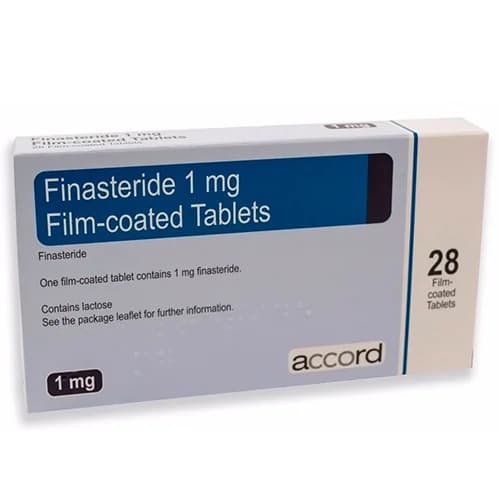
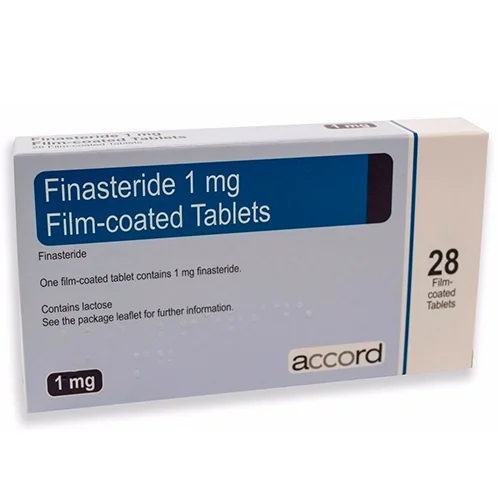
- Finasteride Accord 1mg (Accord Healthcare): a UK generic manufactured by Accord, one of the most commonly dispensed brands in NHS pharmacies. Same 1mg dose, similar oval film-coated tablet. See our Accord Finasteride 1mg product page for pricing.
- Finasteride Aristo 1mg (Aristo Pharma): German-based generic manufacturer, MHRA licensed for the UK. Same 1mg dose.
- Finasteride Teva 1mg (Teva UK): another common UK generic option, dispensed against prescription across UK pharmacies.
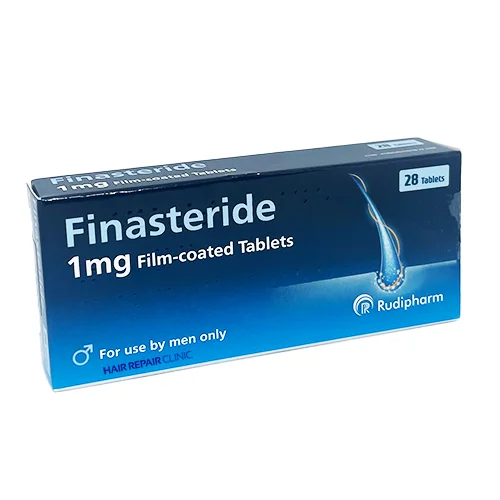
- Generic finasteride 1mg (mixed manufacturers): UK pharmacies routinely dispense whichever generic is in stock, all MHRA licensed and clinically equivalent. Our generic Finasteride 1mg starts at £15 for a monthly 28 tablet pack, falling to 36p per tablet on a 12 month value pack.
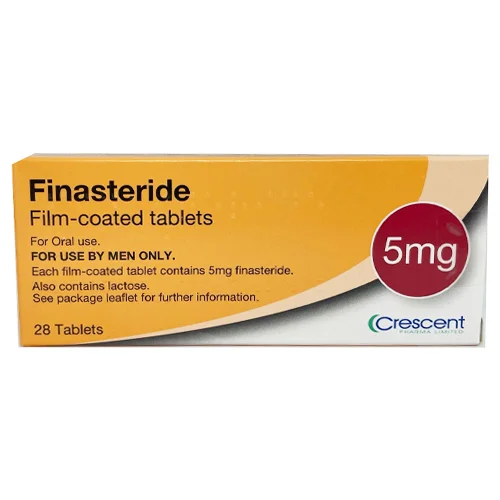
- Finasteride 5mg tablets (multiple UK generics): MHRA licensed for benign prostatic hyperplasia (BPH), NOT for hair loss. Sometimes prescribed off-label for hair loss at a reduced dose set by the prescriber, which can make it the lowest-cost option per month (~£10 to £14 on our 4 and 12 month packs). The dose is decided at prescriber review, not self-managed. See our Finasteride 5mg tablets.
How finasteride works for hair loss
Finasteride is a Type II 5-alpha reductase inhibitor. In plain English: the enzyme 5-alpha reductase converts testosterone into dihydrotestosterone (DHT) inside your body. DHT is the hormone that shrinks (miniaturises) hair follicles in men with a genetic predisposition to male pattern hair loss. Less DHT means less follicle miniaturisation, which means existing follicles stay productive longer and some previously miniaturised follicles can recover.
Key numbers on the mechanism:
- Finasteride 1mg daily reduces serum DHT by roughly 70 percent. Scalp DHT falls in parallel.
- Effect on serum testosterone is minimal, typically a small increase within normal reference range.
- Peak DHT suppression is reached within 24 hours of the first tablet. Sustained daily dosing keeps DHT suppressed.
- DHT levels start returning to baseline within 24 to 48 hours of stopping. Any hair gained is lost over 6 to 12 months once treatment is discontinued.
This is why finasteride is a maintenance treatment, not a course. Gains persist only while treatment continues.
Licensed vs off-label uses in the UK
Finasteride has two MHRA licensed uses in the UK, at two different strengths:
- 1mg daily (Propecia and generics) is MHRA licensed for the treatment of male pattern hair loss in men aged 18 to 41. This is the on-label use for hair.
- 5mg daily (Proscar and generics) is MHRA licensed for benign prostatic hyperplasia (BPH) in older men. This is NOT a licensed hair loss dose.
Off-label uses commonly prescribed by UK prescribers:
- Finasteride 5mg at a reduced off-label dose for hair loss. Because the dose-response curve for scalp DHT suppression plateaus around 1mg (see clinical evidence below), there is no hair-loss benefit to dosing above 1mg, and some UK prescribers use the cheaper 5mg tablet at a lower dose they set for the individual. The strength and schedule are a prescriber decision, not a self-managed one.
- Finasteride for women over 45 or post-menopausal women under specialist supervision. Not the standard first-line female treatment (spironolactone or topical minoxidil is), but sometimes used when other options have failed.
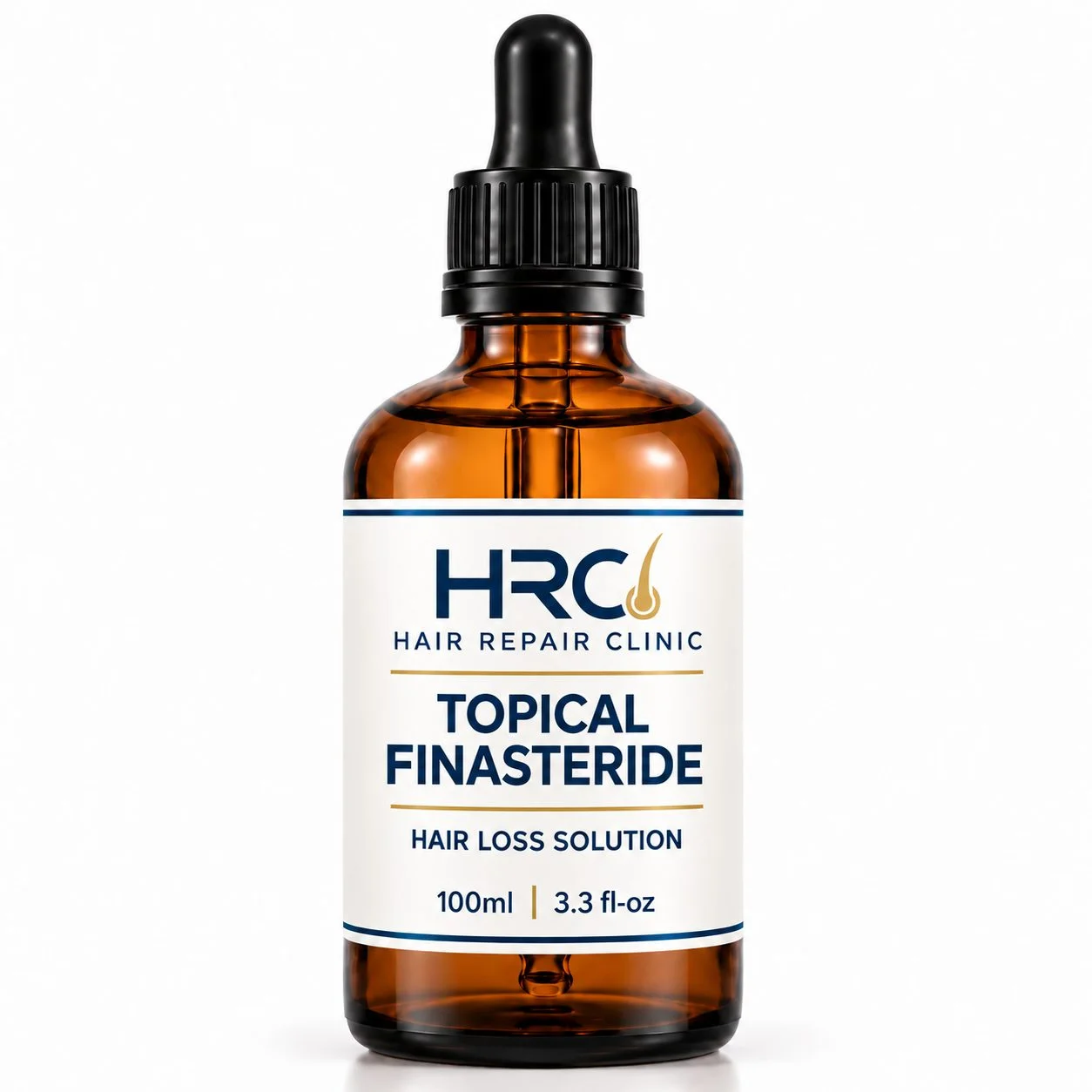
- Topical finasteride (compounded solution applied to the scalp). MHRA has never licensed a topical finasteride product, so all topical finasteride in the UK is prescribed off-label as a Special (a compounded medicine prepared to individual prescription). See our topical finasteride.
Off-label prescribing is legal and common practice in the UK when a prescriber judges it appropriate for the individual patient.
Clinical evidence: the trials behind finasteride
Finasteride has 25+ years of clinical evidence at doses relevant to hair loss. The trials that matter:
- Original Merck 5 year trials (Kaufman et al 1998, published in the Journal of the American Academy of Dermatology): 1,879 men with male pattern hair loss randomised to finasteride 1mg or placebo. At 2 years: 66 percent of treated men had increased hair count versus 7 percent on placebo, and 83 percent maintained or improved vs 28 percent on placebo. Effect sustained at 5 years. This is the trial that supported the MHRA 1998 licence.
- Roberts et al 1999 dose-response study: compared finasteride 0.2mg, 1mg, 5mg and placebo daily in men with androgenetic alopecia over 12 months. The 1mg and 5mg doses produced clinically similar hair count improvements, both significantly better than 0.2mg and placebo. The practical point: higher doses do not out-perform 1mg for hair, so there is no benefit to dosing above 1mg.
- Rossi et al 2011 long term follow up (10 years): Italian cohort of 118 men on finasteride 1mg daily. 86 percent had clinical improvement or stabilisation at 10 years. Adverse events at 10 years were similar to placebo comparator groups. This is the strongest published evidence that finasteride works over the long haul, not just the initial 1 to 2 years.
- Sato et al 2012 meta-analysis: pooled 12 randomised trials of finasteride 1mg in men, confirming ~9 to 10 percent increase in hair count at 1 year and ~15 to 18 percent at 2 years. These are the numbers you see quoted in most hair loss content.
Practical takeaway: finasteride is the most rigorously evidenced oral hair loss treatment. Response rates are high but not universal (roughly 15 percent of men are true non-responders at 1 year). If finasteride 1mg has not moved the needle at 12 months, the next options are dutasteride 0.5mg (stronger DHT block) or combination with minoxidil.
How long does finasteride take to work?
Finasteride is not a short course. It takes months for follicles to respond and the growth cycle to shift towards fewer miniaturised hairs. Expected timeline:
- Weeks 1 to 4: no visible change. Serum DHT is falling by 70 percent but hair does not respond in real time.
- Months 3 to 6: reduced shedding is the first visible sign. You may notice fewer hairs in the shower drain or on your pillow. Visible thickness gains are still weeks away.
- Months 6 to 12: first visible hair count improvements. Full thickness gains are typically judged at 12 months of consistent daily use.
- Months 12 to 24: continued gradual improvement. Peak effect is usually reached at 2 years.
- Years 2 to 10: maintenance. Gains slowly plateau but consistent daily use maintains them.
Missing occasional days: fine, resume the next day. Missing multiple days per week: your DHT suppression is not sustained and you will underperform the trial results. Consistency is more important than the specific time of day.
Side effects: the honest picture
Finasteride is generally well tolerated in the trial data. The published side effects, in order of frequency:
- Sexual side effects. In the trials supporting the licence, at 12 months against placebo: decreased libido 1.8% versus 1.3%, erectile dysfunction 1.3% versus 0.7%, and ejaculation disorder (mainly reduced volume) 0.8% versus 0.4%. By year five each of these had fallen below 0.3%. Note how much of the reported rate also appeared in the placebo arm, which is a genuine feature of this data. Reports are usually mild and reversible on stopping, and some men find they resolve while continuing treatment.
- Breast tenderness or enlargement (gynecomastia): rare, roughly 0.5 percent incidence. Usually resolves on stopping.
- Mood changes (low mood, depression, anxiety): reported in post-marketing surveillance but low frequency in trials. Take seriously if it develops; discuss with prescriber.
- Testicular pain: rare.
- Allergic reactions: uncommon rash, pruritus.
On post-finasteride syndrome (PFS): a small subset of men report persistent sexual, mood or physical side effects that continue after finasteride has been discontinued. The published incidence is very low and the mechanism is not fully understood. UK prescribers acknowledge PFS as a real (though uncommon) concern. If you develop side effects on finasteride, tell your prescriber immediately rather than waiting; early discontinuation is associated with better resolution outcomes. If you are worried about PFS specifically before starting, topical finasteride (lower systemic exposure, roughly one-third the sexual side effect rate in Piraccini et al 2022) is a lower-risk alternative.
Psychiatric side effects and the May 2026 MHRA position
On 11 May 2026 the MHRA issued updated safety warnings covering both finasteride and dutasteride. The current regulatory position is that these medicines are associated with depression, suicidal ideation and sexual dysfunction which may persist after treatment is stopped.
What this means in practice:
- Tell your prescriber if you have any history of depression or suicidal thoughts before starting. It does not automatically rule treatment out, but it must be weighed properly.
- If you develop depression or suicidal thoughts while taking finasteride 1mg, stop taking it and seek medical advice.
- UK finasteride packs carry a patient alert card, introduced in 2024, covering these risks. Read it, and read the leaflet inside your pack.
- Suspected side effects can be reported directly to the MHRA through the Yellow Card scheme.
If you are in crisis, contact your GP, call 111, or call Samaritans free on 116 123.
Finasteride vs the alternatives
UK men researching hair loss treatment have a limited but effective set of options. Here is where finasteride fits:
- Finasteride 1mg oral (this guide): the MHRA licensed first-line oral treatment for male pattern hair loss. Reduces serum DHT by ~70 percent. Roughly £15 to £22 per month at UK generic prices.
- Dutasteride 0.5mg oral: stronger DHT blocker (both Type I and Type II 5-alpha reductase, ~90 to 98 percent DHT reduction). Off-label for hair loss in the UK. Better hair count outcomes in head-to-head trials, but a longer half-life (5 weeks vs finasteride 6-8 hours) means side effects take longer to resolve on stopping. See our Dutasteride 0.5mg. See also our full finasteride vs dutasteride comparison.
- Topical finasteride: the same finasteride active applied to the scalp rather than swallowed, in a 100ml TrichoSol bottle. Roughly one-third the sexual side effect rate of oral finasteride at similar hair count outcomes (Piraccini et al 2022). Off-label in the UK. See our topical finasteride or the full topical vs oral finasteride comparison.
- Minoxidil (topical 2 to 15 percent or oral 2.5 to 5mg): a different mechanism (potassium channel opener, extends anagen phase, growth stimulator). Works alongside finasteride, not instead of it. The classic evidence-backed male regimen is oral finasteride 1mg plus topical minoxidil 5 percent. See our Topical Minoxidil or oral minoxidil 5mg.
- OTC "hair growth" supplements (biotin, saw palmetto, DHT-blocker herbal blends): weak to no evidence. No published RCT shows biotin or saw palmetto matches finasteride 1mg for hair count. Save your money.
What NOT to combine: never take finasteride and dutasteride together (two DHT blockers, no meaningful additional benefit, higher side effect risk). Never take oral finasteride with topical finasteride (same drug, two routes, stacks the dose). Minoxidil with finasteride is fine and encouraged; these are different drugs with different mechanisms.
Dosage
The MHRA licensed hair loss dose is 1mg per day, once daily, at any consistent time. With or without food. Two minutes of effort per day.
If you miss a dose: take it when you remember if it is still the same day. If you only remember the following day, skip it and take the next one at the normal time. Never take two to make up for one. A single missed day makes very little difference, because DHT suppression outlasts the drug itself; a regular pattern of missed days will slow your progress.
A lower-cost off-label route. Some UK prescribers use the 5mg tablet (licensed for BPH, not hair loss) at a reduced dose to bring the monthly cost down, since the evidence shows no added hair-loss benefit above 1mg. The right dose and how to take it are set by your prescriber for you individually, not worked out from a web page. If cost matters to you, raise the off-label 5mg option at prescriber review and follow the dose they set. See our finasteride 5mg page.
Higher doses (2mg, 5mg, 10mg daily) do NOT produce faster or better hair growth. The dose-response plateau is around 1mg for scalp DHT suppression, so taking more just increases side effect risk with no additional benefit.
Storage and shelf life
- Store at room temperature (below 25°C), away from direct sunlight and moisture.
- Keep tablets in their original blister pack or bottle until you take them. The blister foil protects the tablet from moisture and light.
- Sealed pack expiry is on the label (typically 24 to 36 months from manufacture). Do not use after the printed expiry date.
- If your prescriber has directed you to split tablets, store the cut pieces in the original closed bottle and use them within 2 weeks, as the cut edge can oxidise once exposed to air.
- Keep out of reach of children, pets, and anyone pregnant or planning pregnancy. Broken tablets can transfer finasteride through the skin, and finasteride is contraindicated during pregnancy.
Excipients: what is in a finasteride 1mg tablet
Active ingredient: finasteride 1mg. Typical excipients in UK generic finasteride 1mg tablets:
- Lactose monohydrate as the primary filler. If you are severely lactose intolerant, ask your prescriber about lactose-free brands.
- Microcrystalline cellulose, pregelatinised starch, sodium starch glycolate, magnesium stearate as tablet binders, disintegrants and lubricants.
- Docusate sodium as a wetting agent.
- Talc, hypromellose, titanium dioxide and yellow / brown iron oxides in the film coating.
The full excipient list is on the manufacturer Patient Information Leaflet enclosed with your medicine. Different brands (Accord, Aristo, Teva, Milpharm, generic) use slightly different excipient combinations; the active is identical.
Regulatory status: POM, MHRA licensed since 1998
- Finasteride is a prescription only medicine (POM) in the UK at every strength. There is no over the counter finasteride.
- Propecia (finasteride 1mg) has been MHRA licensed for male pattern hair loss since 1998. Generic finasteride 1mg tablets are MHRA licensed to the same clinical file.
- Proscar (finasteride 5mg) has been MHRA licensed for BPH since 1994. The 5mg strength is NOT licensed for hair loss; using it for hair loss is off-label prescribing.
- UK prescriber review included at checkout: the online medical questionnaire is reviewed by a UK GPhC registered prescriber before dispensing. This assesses eligibility, PFS history, and contraindications.
- Dispensed by a GPhC registered UK partner pharmacy. Every pack we sell is prepared and shipped in the UK.
Patient Information Leaflets and further reading
- Propecia 1mg PIL (medicines.org.uk): the branded manufacturer patient information leaflet.
- NHS: Finasteride: NHS patient information page.
- NICE CKS: Hair loss (androgenetic, male and female pattern): UK clinical summary for prescribers.
- MHRA Drug Safety Update: finasteride and dutasteride, updated safety warnings for psychiatric side effects and sexual dysfunction (11 May 2026): the current UK regulatory position.
- Finasteride 1mg Summary of Product Characteristics (eMC): the licensed product information, including adverse reaction frequencies.
Every pack we dispense ships with the manufacturer PIL enclosed. Always read the leaflet supplied with your medicine, and contact your prescriber or the pharmacy if anything is unclear.
Our Finasteride Treatments
Next steps
For the broader UK landscape and how finasteride fits with topical and combination approaches, see our complete UK hair loss treatment guide. Comparing finasteride against dutasteride, the alternative anti-androgen? Read our finasteride vs dutasteride comparison. Considering topical over oral for side effect reasons? See our topical vs oral finasteride guide.
Frequently asked questions
Does finasteride really work?+
Yes. Finasteride is one of the most studied hair loss treatments, with over 30 years of clinical data. In the largest trials, around 90 percent of men either stopped losing hair or saw regrowth after 12 months of daily 1 mg use. It works by blocking the enzyme that converts testosterone to DHT, the hormone that miniaturises scalp follicles in pattern hair loss.
How long does finasteride take to work?+
Most men notice reduced shedding by month 3, visible regrowth between 6 and 12 months, and the full effect by 12 to 18 months. Some experience a short shedding phase in the first 4 to 8 weeks as the hair cycle resets; this is normal and a sign the medication is active. Assess results at 6 months, not before.
What are the side effects of finasteride?+
In clinical trials of oral 1 mg finasteride, sexual side effects (reduced libido, erectile difficulty, ejaculation changes) affected roughly 1 to 4 percent of users, usually resolving on stopping. A small proportion report mood changes. Topical finasteride limits systemic absorption, which reduces but does not eliminate the risk. The UK prescriber screens for contraindications before approval.
Is finasteride safe long term?+
Yes, for most men. Finasteride has been licensed for hair loss since 1997 and large long term cohort studies show no increase in serious adverse events with multi year use. The most consistent long term risk is a small reduction in fertility while taking it, which reverses on stopping. Annual review with a prescriber is sensible if continuing past 5 years.
Does finasteride affect testosterone?+
Finasteride slightly raises blood testosterone (around 10 to 20 percent) because it blocks conversion of testosterone to DHT. DHT itself drops by roughly 70 percent. Most men do not notice any change in energy, mood or muscle. Bodybuilders and athletes generally tolerate it well, though a small minority report reduced gym performance.
Can I take finasteride forever?+
Yes, and most men who keep their results do. Pattern hair loss is chronic, so stopping finasteride reverses the gains within 6 to 12 months as DHT levels return to baseline. There is no built in stopping point. Annual prescriber review checks tolerance and discusses any side effects.
What did the MHRA change about finasteride in May 2026?+
On 11 May 2026 the MHRA issued updated safety warnings for finasteride and dutasteride covering psychiatric side effects and sexual dysfunction. The position is that finasteride is associated with depression, suicidal ideation and sexual dysfunction which may persist after treatment is stopped. Prescribers are asked to check for any history of depression or suicidal ideation before prescribing and to monitor during treatment. If you develop depression or suicidal thoughts while taking finasteride 1mg, stop and seek medical advice. UK packs carry a patient alert card introduced in 2024.
Can I get finasteride on the NHS?+
Not usually for hair loss. The NHS treats male pattern hair loss as a cosmetic condition, so finasteride 1mg is not normally available on an NHS prescription and most GPs will not prescribe it for that purpose. The NHS does prescribe finasteride at the higher 5mg dose for an enlarged prostate, which is a different condition under a different licence. For hair loss, most people in the UK access it privately.
How long does finasteride stay in your system?+
The mean terminal plasma half-life is approximately 5 to 6 hours in men aged 18 to 60, and around 8 hours in men over 70, so the drug itself is largely cleared within a day of your last dose. The effect lasts longer than the drug: DHT suppression continues after finasteride has left your bloodstream, and DHT levels typically return to baseline over a few weeks after stopping.
What happens if I miss a dose of finasteride?+
Take it when you remember if it is still the same day. If you only remember the following day, skip the missed dose and take the next one at your normal time. Never take two to make up for one. A single missed day makes very little difference because DHT suppression outlasts the drug itself, but a regular pattern of missed days will slow your progress.
Are finasteride side effects permanent?+
For most men who experience them, no. Sexual side effects usually resolve either during continued treatment or after stopping. However, persistence of sexual dysfunction after stopping is documented in the product information as a post-marketing finding, and the MHRA position updated in May 2026 states that depression, suicidal ideation and sexual dysfunction may persist after treatment is stopped. The frequency is not reliably established. If you have previously stopped finasteride because of persistent effects, disclose it on the questionnaire.
When does finasteride shedding start, and how long does it last?+
If it happens, increased shedding usually appears within the first few weeks to months of starting. It is caused by miniaturising follicles being pushed out of their resting phase into a new growth cycle, so the old weak hair comes out first. It normally settles within a few weeks. Heavy shedding that begins after months of stable treatment, or continues past three months, is worth raising with your prescriber.
Does finasteride affect fertility?+
There is limited evidence that finasteride may reduce semen quality in some men, and the available data indicates this typically improves after stopping. Most men take finasteride without any measurable effect on fertility. If you and your partner are actively trying to conceive, raise it with your prescriber before starting rather than after.
Medical reviewer: Dr Ahmad Moussa MB BCh, MSc, MRCS(Eng), MD, FRCS(SN), NHS Neurosurgeon and Hair Transplant Surgeon.
Published: . Last updated: . Last reviewed: . All prescription medications are dispensed by a GPhC registered UK partner pharmacy.
Disclaimer: this page is for general information only and does not constitute medical advice. Prescription treatments are not appropriate for everyone. Prescription only treatment is supplied only where a UK registered prescriber judges it clinically appropriate after reviewing your online medical questionnaire.
Related Articles
Topical vs Oral Finasteride: Which is Better for Hair Loss in the UK
10 Sept 2026
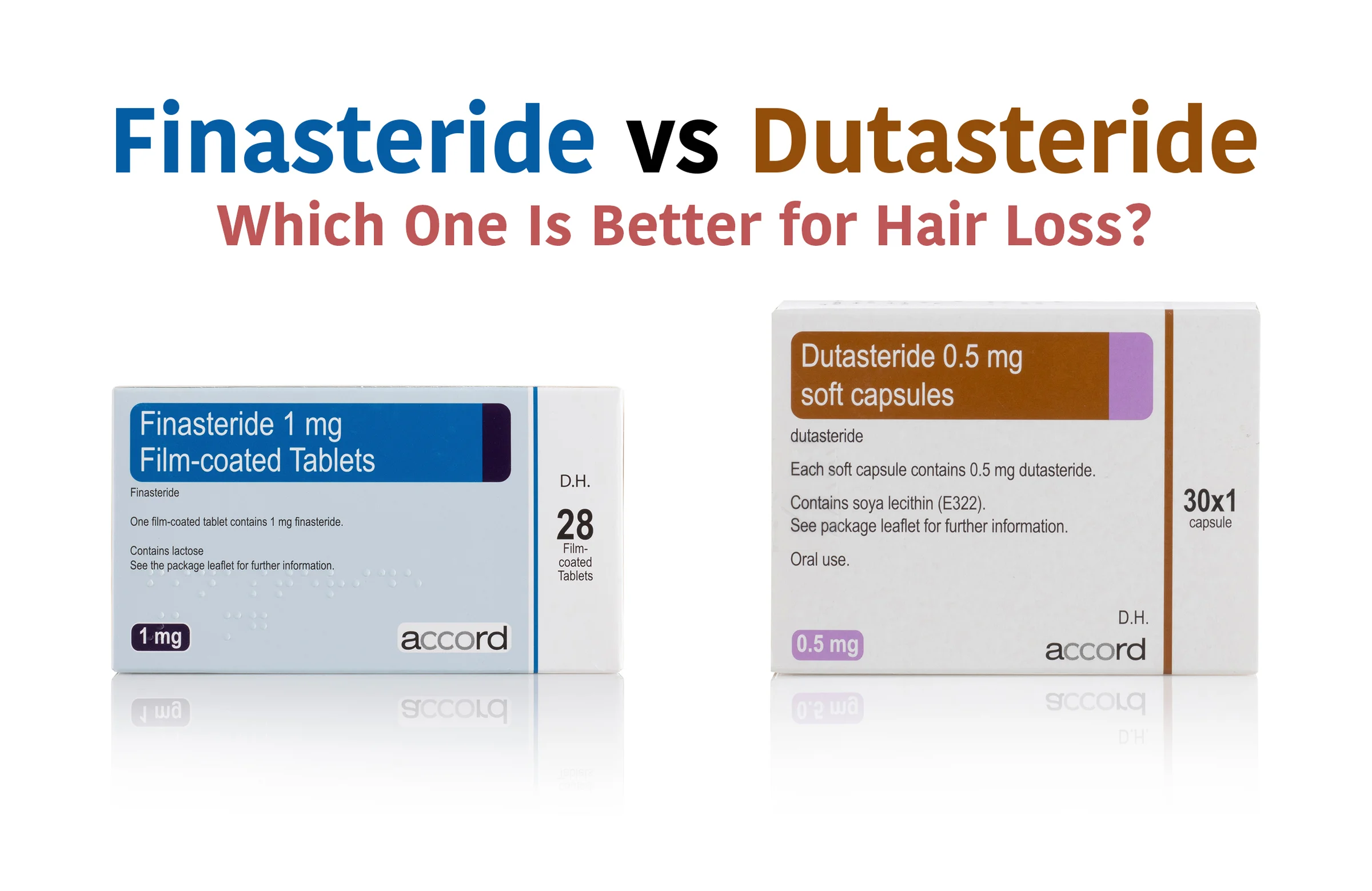
Finasteride vs Dutasteride for Hair Loss in 2026: What UK Men Need to Know
12 Jun 2026
Why Kirkland Minoxidil Isn’t Available in the UK (Unless It’s Fake)
11 Jun 2026
Minoxidil for Hair Loss: How It Works, Strengths and Application
11 Jun 2026
Dutasteride for Hair Loss: How It Works, Who It Is For, and What to Expect
11 Jun 2026

Pharma Hermetic Hair Recovery Program: The Natural Solution to Hair Loss in as Little as 8 Weeks
11 Jun 2026